What comes after a farcical “election” in Venezuela
The vote for a constituent assembly entrenches dictatorship. But the standoff on the streets will continue
IT IS to be the dawn of “a new Venezuela”, proclaimed the president, Nicolás Maduro. He was celebrating the election on July 30th of a constituent assembly, which will now become the supreme power in the country. A day later Venezuelans got a taste of what the new Venezuela might look like. Before first light, agents of Sebin, the state security agency, swooped into the houses of two opposition politicians and hauled them off to prison. Leopoldo López, the country’s most prominent political prisoner, had been transferred to house arrest in July. He expected re-incarceration: he had recorded a video urging supporters to “fight for” Venezuela, to be released when it happened. Antonio Ledezma, the former mayor of Caracas, was still in his pyjamas when agents forced him into a car. Someone took a mobile-phone video of the arrest, in which a woman can be heard screaming “dictatorship” at the abductors.
To Venezuela’s opposition, a large share of its citizens and many foreign governments, that is what Mr Maduro’s constituent assembly represents. No one believes the electoral commission’s claim that 8m Venezuelans voted to choose the body’s 545 members (see Bello). These are either regime bigwigs or people subservient to them. The assembly will be able to rewrite the constitution, delay elections and issue directives to all branches of government. The plan is for it to meet in the neoclassical edifice that houses the legislature, which is controlled by the opposition.
The United States responded to the vote by imposing sanctions on Mr Maduro. He joins North Korea’s Kim Jong Un, Syria’s Bashar al-Assad and Zimbabwe’s Robert Mugabe on the list of leaders who are banned from visiting the United States and whose American assets are frozen. Venezuela’s biggest neighbours, including Argentina, Brazil, Colombia and Mexico, say they will not recognise the new assembly. The ambassadors of Britain, France, Mexico and Spain attended a meeting of the legislature, showing which deliberative body they regard as the legitimate one.
Apart from making Venezuela a pariah, the assembly vote is likely to change little in the short run. The country was already becoming a dictatorship. The puppet supreme court overruled acts passed by the legislature, or the government just ignored them. Now the regime is likely to increase its repression, as the re-arrests of Mr López and Mr Ledezma suggest. On the pretext of reforming the judiciary, the assembly is likely to sack the attorney-general, Luisa Ortega Díaz, a supporter-turned-critic of the regime. She denounced the assembly vote as “a mockery of the people”.
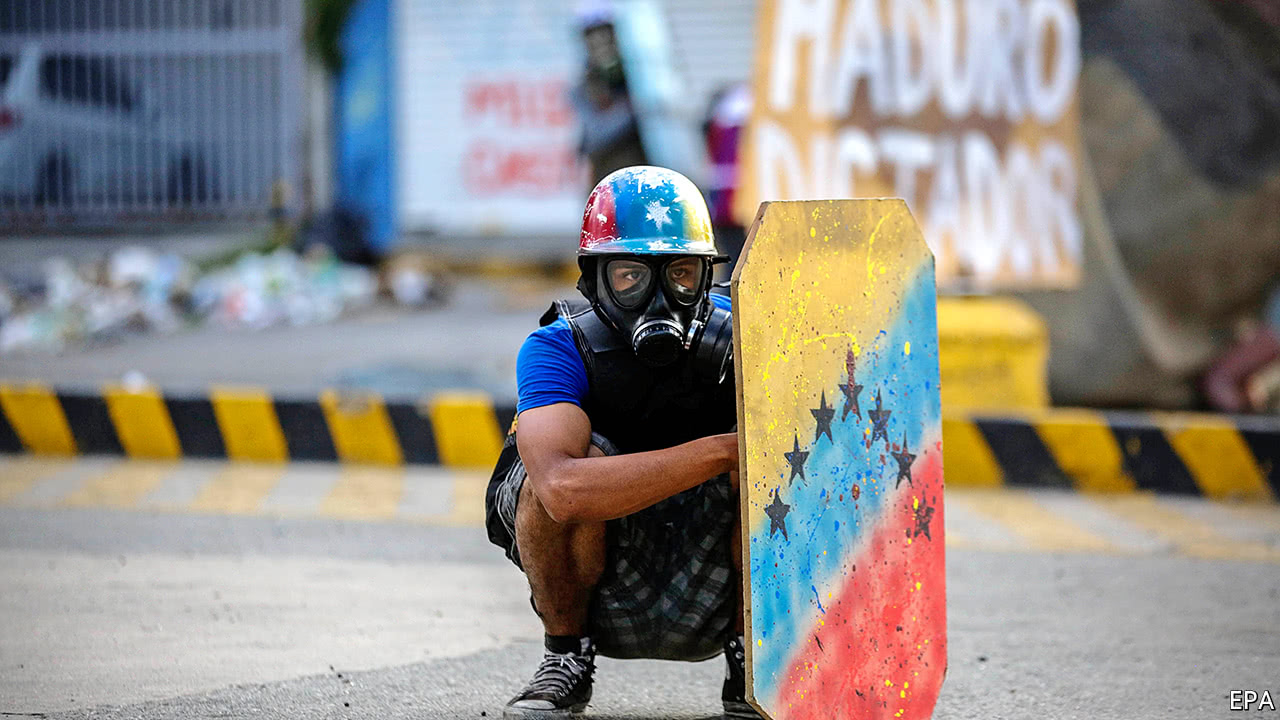
This will worsen the stand-off between the regime and its foes, which include a sprawling coalition of parties called the Democratic Unity alliance (MUD) and irate citizens. More than 120 people have died in protests since April; at least ten were killed on the day of the vote. The MUD has said that the demonstrations will continue.
The stalemate could be broken in two ways. The first would start with a ratcheting up of sanctions by the United States. So far, the Trump administration has targeted only individuals; Mr Maduro is among the 35 Venezuelans on the blacklist of the United States, which has said that it will add more names. It has also threatened to strike at Venezuela’s oil exports, either by ending purchases or by blocking transactions by PDVSA, the state-owned oil company. That would matter much more.
That will surely be the response to hints by Rex Tillerson, the American Secretary of State, that the Trump administration is aiming at regime change. On August 1st he said the United States wants to “create a change of conditions where either Maduro decides he doesn’t have a future and wants to leave of his own accord or we can return the government processes back to their constitution”. He did not say how this might happen.
The second potential game changer would be a further escalation of violence. Partisans of both sides—the armed irregulars who support the regime, called colectivos, and the street fighters of the “Resistencia”—are becoming more radical and less governable. Protesters firebombed police motorcycles during demonstrations against the assembly vote. A breakdown of order could provoke the army to intervene, either to defend the regime or, less likely, to restore democracy.
Mr Maduro would claim that his constituent assembly, due to convene on August 3rd, will end the confrontation in a third way, by ushering in what officials call a “new Venezuelan economy”, less dependent on oil. If Venezuelans are better fed, the fight will go out of the opposition, Mr Maduro may hope. That scenario is as believable as the official turnout figures for the farcical “election”.
To Venezuela’s opposition, a large share of its citizens and many foreign governments, that is what Mr Maduro’s constituent assembly represents. No one believes the electoral commission’s claim that 8m Venezuelans voted to choose the body’s 545 members (see Bello). These are either regime bigwigs or people subservient to them. The assembly will be able to rewrite the constitution, delay elections and issue directives to all branches of government. The plan is for it to meet in the neoclassical edifice that houses the legislature, which is controlled by the opposition.
Latest updates
Apart from making Venezuela a pariah, the assembly vote is likely to change little in the short run. The country was already becoming a dictatorship. The puppet supreme court overruled acts passed by the legislature, or the government just ignored them. Now the regime is likely to increase its repression, as the re-arrests of Mr López and Mr Ledezma suggest. On the pretext of reforming the judiciary, the assembly is likely to sack the attorney-general, Luisa Ortega Díaz, a supporter-turned-critic of the regime. She denounced the assembly vote as “a mockery of the people”.
This will worsen the stand-off between the regime and its foes, which include a sprawling coalition of parties called the Democratic Unity alliance (MUD) and irate citizens. More than 120 people have died in protests since April; at least ten were killed on the day of the vote. The MUD has said that the demonstrations will continue.
The stalemate could be broken in two ways. The first would start with a ratcheting up of sanctions by the United States. So far, the Trump administration has targeted only individuals; Mr Maduro is among the 35 Venezuelans on the blacklist of the United States, which has said that it will add more names. It has also threatened to strike at Venezuela’s oil exports, either by ending purchases or by blocking transactions by PDVSA, the state-owned oil company. That would matter much more.
Oil as a weapon
Oil is virtually the only source of hard currency; the United States buys 40% of Venezuela’s exports. Although Venezuela might find other buyers, an American embargo would cut off revenues in the short run and probably force it to accept lower prices from more distant customers. That would worsen shortages of food and medicine, brought about by the leftist regime’s economic mismanagement, which have already made life close to unbearable for most Venezuelans. The problem is, such tough sanctions might hurt ordinary folk more than the fat cats in charge, who control access to dollars. They might also encourage the regime to dig in.That will surely be the response to hints by Rex Tillerson, the American Secretary of State, that the Trump administration is aiming at regime change. On August 1st he said the United States wants to “create a change of conditions where either Maduro decides he doesn’t have a future and wants to leave of his own accord or we can return the government processes back to their constitution”. He did not say how this might happen.
The second potential game changer would be a further escalation of violence. Partisans of both sides—the armed irregulars who support the regime, called colectivos, and the street fighters of the “Resistencia”—are becoming more radical and less governable. Protesters firebombed police motorcycles during demonstrations against the assembly vote. A breakdown of order could provoke the army to intervene, either to defend the regime or, less likely, to restore democracy.
Mr Maduro would claim that his constituent assembly, due to convene on August 3rd, will end the confrontation in a third way, by ushering in what officials call a “new Venezuelan economy”, less dependent on oil. If Venezuelans are better fed, the fight will go out of the opposition, Mr Maduro may hope. That scenario is as believable as the official turnout figures for the farcical “election”.