The Walter Rodney Murder Mystery in Guyana 40 Years Later
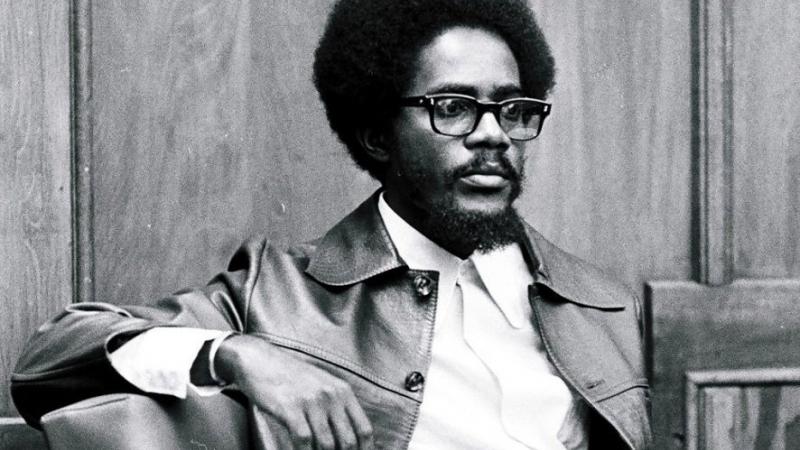
Documents Chart U.S. Embassy’s Effort to Answer Questions About the 1980 Death of
an Acclaimed Scholar and Political Activist
Update: Guyana National Assembly resolution in August 2021 affirms Burnham
government responsibility
Washington D.C., November 12, 2021 – More than four decades after the murder of Guyanese scholar-political activist Dr. Walter Rodney on June 13, 1980, Guyana’s National Assembly accepted the findings of a major commission of inquiry into the assassination. It concluded that the government of then-Prime Minister Forbes Burnham had organized the murder, which was perpetrated by an active-duty sergeant in the Guyana Defense Force, Gregory Smith.
To mark these findings and to reacquaint readers with key documents about Rodney’s final months, the National Security Archive updates its 2020 posting with a new document and information about the National Assembly’s actions.
On August 9, 2021, the Assembly voted to adopt “Resolution No. 23 of 2021 …” to implement the 2016 findings of “The Commission of Inquiry Appointed to Enquire and Report on the Circumstances Surrounding the Death in An Explosion of the Late Dr. Walter Rodney on Thirteenth Day of June, One Thousand, Nine Hundred and Eighty at Georgetown.” [1] The Commission found that Rodney “could only have been killed in what we find to be a State organized assassination with the knowledge of Prime Minister Burnham.” Moreover, the Commission had “no hesitation in holding that Gregory Smith was responsible for Dr. Walter Rodney’s death on 13 June 1980 and that in so doing he was acting as an agent of the State having been aided and abetted so to do.”
The National Assembly resolution was the result of a persistent campaign by Guyana’s Working People’s Alliance (WPA) on behalf of Rodney and his family. It waged a long campaign in the media,[2] including citing documents posted by the National Security Archive, such as the findings of the U.S. Embassy that there was a “strong ‘circumstantial case’ that the PNC-led government had assassinated Rodney. The WPA campaign had a decisive impact on the actions taken by the National Assembly.
The Rodney case is not over, however. The Rodney family is seeking to change the characterization of his killing in his death certificate from misadventure to assassination. Meanwhile, Guyana’s National Archives have been renamed the Walter Rodney National Archives and his grave and the site where he was killed are slated to become national monuments.
* * *
Original posting text
Washington, D.C., June 13, 2020 – The U.S. Embassy in Guyana in 1980 had strong evidence to believe that the death of internationally-known historian and activist Walter Rodney in the capital of Georgetown was a political assassination, according to declassified documents obtained and posted today for the first time by the National Security Archive at The George Washington University.
Rodney, a popular opposition figure in Guyana known as much for his sharp critiques of capitalism as his disapproval of the U.S.-backed government of Prime Minister Forbes Burnham, was killed when a bomb exploded in the car driven by his brother. The government claimed Rodney himself and his brother, Donald, were responsible but the cables posted today describe deepening skepticism on the part of the embassy in the face of mounting indications that the authorities had covered up evidence.
In 2014, the president of Guyana established a commission to investigate the death. It was terminated early after a new government came to power, but the commission’s report nevertheless concluded that state authorities had been behind the operation. A source of great frustration to Rodney’s family and interested observers is the fact that the full report has not yet been released.
Today’s posting includes 20 declassified State Department cables and features a substantial biographic sketch of Rodney (see sidebar) as well as links to related web sites.
* * *
The life and death of Dr. Walter Rodney: A Brief Account
By Dr. Mary E. Curry
On the 40th anniversary of Walter Rodney’s death, the National Security Archive publishes for the first time a selection of previously classified cables sent between the American Embassy in Georgetown, Guyana, and the Department of State in Washington, DC. during 1980. The cables reveal how the U.S. involved itself with Rodney and the Working People’s Alliance (WPA) during the turbulent local and regional events of 1980. Evidence of complicity in Rodney’s murder by Guyana’s government, controlled by the People’s National Congress (PNC) and Prime Minister Linden Forbes Burnham, accumulated over the summer and embassy officials faced difficult choices. Because the Jimmy Carter presidency (1977–1981) made human rights a major focus of its foreign policy, embassy officials in Guyana had to both acknowledge the Burnham government’s abuses and continue supporting its economy as part of U.S. overall Cold War policy in the Caribbean and Central and South America.[3]
Guyana and the Cold War
The U.S. maintained a working relationship with Guyana despite Guyana implementing a nationalistic, leftist-oriented economic policy in the 1970s, including nationalizing the bauxite industry.[4] Economic aid and loans from International Monetary Fund were used to promote economic development and prevent Cuban and Soviet influence from spreading. U.S. diplomats serving in embassies across the Caribbean kept a close watch on events as did employees of the CIA and DIA.[5]
The location of Guyana, which is about the size of Idaho and has a population of approximately 800,000, on the north coast of South America gave it special significance during the Cold War years. The goal was to prevent the Soviet Union from a gaining a foothold on the South American continent. Since 1964 the U.S. preferred the Forbes Burnham PNC government – by 1980 enjoying its sixteenth year in power -- over the more openly Marxist-oriented ideology of Cheddi Jagan, leader of the chief opposition People’s Progressive Party (PPP). (For documents on the U.S. and British intelligence agencies’ success in 1964 promoting Forbes Burnham over Cheddi Jagan, see National Security Archive briefing book no. 700.)
The year 1980 was a turbulent one in the Caribbean and worldwide. It was also a presidential election year in the U.S. Democratic Party incumbent Jimmy Carter would run against Republican nominee and former California Governor Ronald Reagan. A year earlier, the Shah of Iran had been toppled and the U.S. Embassy was overrun by student dissidents who would hold embassy staff hostage until January 1981; in March, Maurice Bishop’s New Jewel Movement overthrew the government of the small island nation of Grenada; in July, the dictator Anastasio Somoza, another long-time U.S. ally, fled Nicaragua and the Sandinistas took power in Managua; in December, the Soviet Union invaded Afghanistan. The repercussions of these events would continue into 1980, punctuated by the failed hostage rescue attempt in Iran and the start of the eight-year Iran-Iraq War. Other regional events in 1980 included a coup in Suriname in February and the “Marial boat lift” from Cuba, which caused a refugee crisis.
Richard Dwyer, who served as deputy chief of mission in Guyana from 1978 to July 1980 (and appears in these documents), described the view U.S. policymakers and diplomats: “Our problem there was, and it wasn't that much of a problem – what we didn't want was a Cuba on the coast of South America … Probably the most important consideration of American foreign policy, the Carter administration included, was that there be more or less tranquility in this area.” Dwyer described Prime Minister Forbes Burnham’s government by saying, “His politics were becoming increasingly unsavory ... The country was riddled by corruption – moral and economic. To get along you had to know who to see and how to see it.”
Exploring the Documentary Record
The National Security Archive obtained the documents in this posting from the U.S. Department of State through a Freedom of Information Act (FOIA) request seeking all mentions of Walter Rodney during 1980. The request was made on behalf of the Rodney family who wanted to learn what the American Embassy in Georgetown knew about his death and how it reacted. The 66 documents arrived after the 2014–2015 Commission of Inquiry in Guyana completed its report (see a version of the report here), but the collection was given to the Rodney family.[6]
The 20 records reproduced in this posting describe the attempts of U.S. Ambassador George Roberts and members of his staff to follow new information as it emerged about Rodney’s death. The American diplomats seem genuinely interested in finding out what happened but troubled at growing evidence that the U.S.-backed regime was covering up the existence (and then whereabouts) of an active duty sergeant who allegedly gave the booby-trapped walkie talkie to Rodney. The picture looked bleaker when sources indicated that a senior military officer, Guyanese Defense Force Chief of Staff Norman McLean, may have helped the sergeant, Gregory Smith, escape the country and set him up with a shrimp fishing company. Embassy sources included articles in government-controlled and opposition newspapers, government officials, and unnamed individuals. Of particular interest among these records are Ambassador Roberts’ lengthy summary of “opinions” in mid-August 1980 (Document 15) and the colorful account (Document 18) by former Deputy Chief of Mission Dwyer of his interview with a shrimp fishing executive in Martinique who gave detailed information about the bombing but in the end may only have clouded the issue further.
The cables focus on Rodney’s killing but still manage to give glimpses of surrounding issues: Guyanese politics, American attitudes toward Burnham and his government, and the continuing strong Cold War impulses of American diplomats in the region. In one report, for example, while betraying a faint distaste for Burnham, Roberts nevertheless comments that his Marxist rival Cheddi Jagan was “still unacceptable to us.”
READ THE DOCUMENTS
Before June 13th
Document 01
Department of State Central Foreign Policy Files, U.S. National Archives AAD
This cable describes a 5 December meeting requested by Walter Rodney to meet “discreetly” with James L. Adkins, who was the embassy’s political officer. Rodney had briefly met Adkins earlier in 1979 and was comfortable talking with him. Rodney would not have known that Adkins was a CIA employee attached to the embassy, [7] The conversation covered the increasingly repressive tactics the GOG (Government of Guyana) was using against opposition groups, leaving the WPA, in Rodney’s view, no alternative but violence, which Rodney predicted could result within the next year. Rodney said while he “abhorred terrorism, the WPA may be forced to it.” Relations with and opinions on Grenada and Cuba and Suriname were covered. Adkins’ Comment section concluded that Rodney “intensely” wanted to convince him that he was favorable to the U.S. and no threat to its national security. He added that the WPA “recognized that Guyana could only be saved by a government which represented all interest groups and races.” Then, the conversation assumed a dark side when Rodney predicted that because violence might result within the year, he was asking for Adkins’ assistance in obtaining permanent resident alien status for his family to go to the U.S. in case he was killed.
Document 01A New
Freedom of Information Act
The cable describes the January 15 meeting at the U.S. Embassy requested by Working People’s Alliance (WPA) leader Dr. Walter Rodney and deputy leader Dr. Rupert Roopnaraine to present the WPA’s domestic and foreign policies to Ambassador George Roberts and Deputy Chief of Mission (DCM) Richard Dwyer. This second of the three meetings Rodney held with Embassy officials in the six months prior to his death differed in tone from the private discussion Rodney had with James Adkins in December (Document 01). In January at the Embassy, Rodney focused on reassuring the ambassador and deputy chief that the WPA had proven Guyana’s multi-racial population could work together to establish a national unity caretaker government that would hold free and fair elections with outside observers. Dr. Roopnaraine (misspelled Roopnarine in the cable) was born in 1943 and had a similar educational background as Rodney, having been awarded a doctorate from Cornell University in Comparative Literature; his work for the WPA and in Guyanese politics began in 1977 and by 1979 he was Rodney’s deputy. Also mentioned by Rodney were the highly respected Guyanese political activists Eusi Kwayana, born 1925, and Moses Bhagwan, born 1936. Their experiences in political parties in the 1950s and 1960s led them to strongly support Rodney and WPA’s goals in the 1970s.
Rodney told Roberts and Dwyer the U.S. was wrong to continue supporting the People’s National Congress (PNC) Forbes Burnham regime, in power since 1964, because the authoritarian regime ruled Guyana by “fear, greed, and violence,” and it would inevitably fail. Unless a genuine representative government was established, the citizens would eventually revolt and overthrow the PNC’s one-party rule. Rodney only briefly referred to physical harassment committed by agents of the PNC against WPA organizational meetings, and he made no mention of WPA plans to retaliate with violence.
Despite the U.S. promoting human rights policies domestically and abroad, Rodney said the only reason the U.S. continued supporting the Burnham PNC government was its mistaken belief that “the only realistic alternative to Burnham was the Moscow-oriented Peoples Progressive Party (PPP) of Cheddi Jagan.” Rodney was insistent that, unlike the PPP’s Moscow orientation, the WPA and its leaders were “not beholden to any foreign power and did not seek such affiliation.” However, judging from the Comment section of the cable, it was clear that Rodney’s assurances could not overcome the Embassy officers’ equating of the WPA’s socialist economic goals with Soviet style communism.
Document 02
Freedom of Information Act request
This cable provides background on the Guyanese citizens’ right to have a public trial under its former and new Constitution. It mentions that embassy officials expect to attend the upcoming trial in June for arson of Dr. Walter Rodney, Dr. Rupert Roopnarine, and Dr. Omawale, leading members of the WPA. Amnesty International had reportedly requested to send an observer when the case came to trial. The cable reports that two WPA activists have been killed in recent months in confrontations with the police who said they had either threatened police officers or resisted arrest. The WPA alleged that Police “Murder” was being used by the authorities as a policy to eliminate opponents against whom the authorities had no real case.
Document 03
Freedom of Information Act request
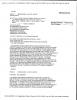
This cable describes the embassy’s third meeting with Dr. Walter Rodney since December 1979. Later cables reveal that Ambassador Roberts knew Rodney from when they were in Dar es Salaam in the 1960s, and embassy Political Officer James L. Adkins had met with Walter Rodney twice in 1979 and knew Mrs. Rodney. Embassy officials were well informed about Rodney’s international reputation as a scholar and WPA leader. In this meeting, the focus was on his views on how the U.S. treated Guyana compared to its regional neighbors, and the subjects of potential violence and terrorism were covered.
Rodney was described as “being in good spirits” and said while active in WPA organizational work he had also continued his academic work by completing for publication a book on Caribbean history to be published by Johns Hopkins University Press. Rodney claimed US funding for Guyana was not being used to promote social services but instead abetted GOG control over opposition parties by freeing funds for surveillance technology and military equipment. He asked why the US praised human rights progress in Barbados while criticizing those of Grenada but ignored human rights abuses in Guyana. He was unwilling to agree the refugees fleeing Cuba meant its economy had failed but said Cuba needed to free itself from the Soviet “yoke,” meaning that Soviet aid had prevented Cuba from developing a successful economy. He described the WPA’s relationship with the one-year-old Maurice Bishop regime in Grenada as being quite good. Regarding violence, Rodney said the WPA was willing and able to defend itself if one of its leaders should be killed by the government, but he was opposed to terrorism and harming innocent people.
Document 04
Freedom of Information Act request
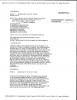
This cable assesses the political leadership in Guyana, concluding: “But overall, Forbes Burnham seems confidently, even arrogantly in control, and remains the only individual who makes the important decisions.”
Relying on embassy observations, an unidentified “reliably good source,” and rumors, the apparently tranquil political situation at this time was mainly due to the GOG’s delay in establishing the new Constitution with no definite date being set for national elections. Residents’ concerns include the upcoming trial of three WPA leaders for arson [set for 3 June] and what might occur if one or all of them are found guilty, including the possibility of terrorist attacks against the government by more radical WPA members. In addition, poor economic conditions, increasing use of automatic weapons by criminals, and the number of suspects killed by police in the course of arrests result in a “fragile calmness,” presumably the calm before a storm.
Document 05
Freedom of Information Act request
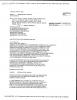
This cable quotes an article from the GOG-owned newspaper Guyana Chronicle about the 1 June arrests of 23 individuals. Sixteen were reported to be “involved in training of the use of arms with the intent of overthrowing the government of Guyana,” and seven in New Amsterdam were arrested for “defacing public buildings.” GOG-controlled radio broadcasts indicated the latter were WPA activists accused of placing anti-government slogans on buildings. The arrests were likely intended to intimidate because they occurred just two days before the 3 June scheduled trial on arson charges of the three WPA leaders. The embassy repeated its plans to send an observer to the trial of Dr. Rodney, Dr. Omawale, and Dr. Roopnairine, although space would be limited. Great Britain was sending former Labor Attorney General Sam Silken, and Amnesty International would be represented by David Weissbrodt, a University of Minnesota law professor, who had previously worked as a consultant on political trials for the State Department. The trial opened on 3 June but was adjourned until late August, according to a 14 June 1980 cable (Document 6).
Note: A lengthy article by Sam Silkin, the UK Parliamentary Human Rights Group observer to the 3 June arson trial provides an eye witness account of the events inside and outside the court, including the prosecutor’s demeanor, conversations with Rodney and the other defendants, and listening to Rodney address the crowd of two to three thousand who waited outside to greet the defendants after the trial was adjourned. [8]
Human Rights Report and Meeting with Forbes Burnham
Document 19
Freedom of Information Act request
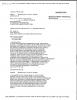
This is a draft version of the important Human Rights report for Guyana for 1980 prepared by the embassy in Georgetown. These reports, first introduced by the Carter administration, receive careful review and revision prior to being published and presented to Congress and the public. Often a draft version will include information that is later eliminated. However, due to the ongoing investigation and source information on Walter Rodney reported to the embassy, the published version in this case is more definitive, stating “Available information indicates that the government was implicated in the June 13 death of WPA activist Walter Rodney and in the subsequent removal of key witnesses from the country.” (Country Reports on Human Rights Practices 1980, p. 56). By comparison, in the draft report the phrase “may have been involved” was used (segment C-6 of Document 19).
Document 20
Freedom of Information Act request
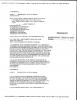
Ambassador Roberts made a courtesy call on now President Forbes Burnham at Burnham’s request. Roberts saw it as an opportunity to explain the new human rights policy of the U.S. introduced by the Carter administration. However, while Roberts later reported that the meeting was “non-contentious,” Burnham was not having any of it and “launched into a defense of Guyana’s human rights situation,” declaring the “United States had too many beams in its own eye to make accusations about human rights and democratic processes in Guyana.” Roberts noted that concerns raised by the State Department’s Bureau of Human Rights and Humanitarian Affairs, “along with other offices in the Department,” included “various reports about the death of Dr. Walter Rodney” and issues surrounding elections in the country. Burnham believed that U.S. complaints reflected the fact that Guyana had never been forgiven for nationalizing the bauxite industry. Regarding Rodney’s death, Burnham said the late activist had been up to “no good” and had blown himself up with his own bomb.
Death and Allegations of CIA Involvement
Document 06
Freedom of Information Act request
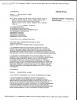
This cable marked “Immediate” reports the shocking news of Dr. Rodney’s death in a car explosion on the evening of Friday, 13 June. Although the GOG deputy police commissioner for crime, Cecil “Skip” Roberts [9] , told the embassy that Rodney’s identity had not been immediately confirmed, the embassy had already heard about a WPA press release issued early that morning that said he had been murdered and added “informed sources state that it [press release] accuses the Guyanese government and the CIA of murdering Rodney.”
Family members and then the Guyanese police soon confirmed that Dr. Walter Anthony Rodney was the deceased individual. Who was responsible for his death quickly evolved into two arguments: the GOG claimed Rodney caused his own death by accidentally switching on an illegally obtained bomb concealed in a walkie talkie, while the WPA claimed a bomb had been hidden in the walkie talkie given to Rodney and his brother Donald by an undercover government agent. The WPA alleged the bomb was then remotely detonated by that agent, who immediately left the country on a flight arranged by the government.
Note: A 35-year struggle to find an answer has been pursued by Rodney’s widow, Patricia Rodney, and culminated in a formal Commission of Inquiry held in 2014. The commission decided the Forbes Burnham PNC government had been responsible and Gregory Smith was the government’s agent. As of 12 June 2020, only an unofficial printed copy of the report is available, as explained in an Editorial Note on the last page of the Commission of Inquiry with this E-Book. There is no explanation for the government’s delay in releasing the official report to the public.
Document 07
Freedom of Information Act request
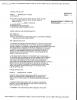
In this cable, Deputy Chief of Mission Dwyer provides some reassurance about the reported WPA claim against the CIA. He wrote, “We have now seen report allegedly issued by the Working People’s Alliance (WPA) on the Rodney death. It does not repeat not accuse the CIA of involvement as the first reports of the WPA reaction (reported REFTEL) had alleged. Nonetheless, further suggestions of USG involvement from the WPA would not be surprising.”
Document 08
Freedom of Information Act request
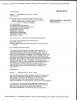
This cable provides additional reassurance for U.S. officials, stating that Donald Rodney’s story did not mention the CIA or the United States. The name Gregory Smith appears here for the first time in a cable as the provider of the walkie talkie that contained a bomb. The identity of this person and his disappearance were major factors leading to embassy officials becoming suspicious of GOG involvement.
Document 09
Freedom of Information Act request
TThis cable relays the decision by the Department of State not to grant a GOG request for the U.S. to provide expert advice since the WPA has allegedly accused the CIA of complicity in Rodney’s death. The Washington office has also learned that the GOG had requested similar assistance from the British who indicated a favorable response.
Document 10
Freedom of Information Act request
This cable cites reports in the GOG-owned newspaper, The Guyana Chronicle, about Rodney’s death but focuses more attention on a series of WPA releases reproducing statements of “outrage and sympathy” from Caribbean leaders that should be “undoubtedly more worrying for the regime of Prime Minister Burnham.” The statements come from the prime ministers of Grenada and Jamaica and the government of Zimbabwe, as well various organizations in the Caribbean, Europe and the United States. The last section of the cable notes another WPA release entitled “Walter Rodney’s Assassination: A Cold-Blooded Plot of the PNC State,” which claims , “It was a carefully designed bomb, a bomb probably designed with the aid of ‘foreign experts’ like the CIA.” The same release alleges that Guyana Defense Force (GDF) Chief of State Norman McLean was involved.[10] Regarding the GOG request for US and British experts to aid their investigation, the WPA release states: “We can have no confidence in the verdict of highly reactionary police froces [sic] from imperialist capitals in a highly political incident in which they may have been involved at an earlier stage.”
Condolence Note from the Embassy
Document 11
Freedom of Information Act request
This cable from Deputy Chief of Mission Dwyer reveals that Ambassador Roberts is out of the country and needs to be consulted before the embassy sends a message of condolence to Mrs. Rodney. The cable reveals that Ambassador Roberts and Walter Rodney had met several years earlier when both resided in Tanzania, and that embassy political officer Adkins was acquainted with Mrs. Rodney. Dwyer considers the propriety of sending a condolence note and how it might be used by the WPA and interpreted by the GOG.
Document 12
Freedom of Information Act request
This cable contains the text of a “personal note of condolence from the chargé” (the acting senior official at the embassy in the ambassador’s absence) to Mrs. Rodney. A memorial Mass for Rodney was held in the Roman Catholic Cathedral on 21 June before his body was released by the police. The cable anticipates a large funeral procession will occur on 23 June leading to his burial in Le Repentir Cemetery in Georgetown.
Updates on Complicity for Rodney’s Death
Document 13
Freedom of Information Act request
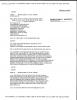
This cable notes that “the GOG and its critics remain as far apart as ever” in their versions of Rodney’s death. The document quotes from GOG-controlled newspaper articles and WPA handouts. One of the main points in dispute was the role – even the existence – of Gregory Smith, who Donald Rodney identified as a former Guyana Defense Force (GDF) sergeant who gave him the walkie talkie that contained an explosive that killed Walter Rodney. The GOG “ridicule[d]” the idea and claimed there was no one named Gregory Smith in the GDF. The cable cites a WPA handout alleging that Forbes Burnham had Rodney murdered because the WPA would be “in the way” of another “rigged election.” The document goes on to reference an article in The Guardian (UK newspaper) by Sam Silkin, the former Labor UK Attorney General who represented the UK Human Rights Group at the 3 June arson trial in Georgetown, who writes that Rodney was a man who did not believe in violence except when all other forms of opposition had been exhausted. (See footnote with Document 5.) Finally, the cable cites a “well-placed source” who told the embassy that preliminary British forensic results indicated the bomb that killed Rodney was resting in his lap and that it was a sophisticated device but “of a type generally available to terrorist organizations around the world.” The embassy offers no comment on this information.
Document 14
Freedom of Information Act request
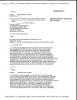
This cable relates anonymous source information given to embassy political officer Adkins about a late night request by Guyanese Defense Force Chief of Staff Norman McLean to an old friend to secretly transport Gregory Smith, a suspect in Rodney’s death, out of Guyana to French Guiana, where he would be employed for a year under an alias in a shrimping company. The friend complied, according to the source, apparently without knowing the identity of the individual he was harboring, but later realized that it was the person accused of killing Rodney. Of significant concern to the embassy was the U.S. citizenship of the friend and the company owner, which would give the appearance of U.S. “complicity in a GOG cover-up.” The cable ends with the comment: “Moreover, if it is true that McLean assisted Smith ... it represents another strong imlplication [sic] of GOG guilt in planning and carrying out Rodyney’s [sic] assassination.”
Document 15
Freedom of Information Act request
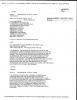
In this lengthy cable, Ambassador Roberts details the strong although admittedly circumstantial case for GOG responsibility for Rodney’s death. He starts with his 6 February meeting with Prime Minister Forbes Burnham and ends with a series of recommendations, including to avoid being closely identified with the GOG, to provide a “frank” treatment of the matter in the State Department’s annual Human Rights report, and to delay any new US aid to Guyana. He points to some risks with this approach, including possibly strengthening the position of long-time leftist politician and future President Cheddi Jagan who remains “unacceptable to US.”
Document 16
Freedom of Information Act request
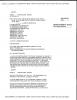
The embassy in Guyana reports on latest developments including stories in the Catholic Standard, a small weekly opposition newspaper, containing a photo of Rodney murder suspect Gregory Smith and confirming that he was a former Guyana Defense Force member and a radio electronics expert. The cable also reveals that the embassy secretly obtained a copy of a British bomb expert’s report specifying the frequency used on the walkie talkie that killed Walter Rodney and asserting “it should be possible to identify which person or persons or services operate on [that] frequency.” The embassy suggests there has been “foot-dragging by the Guyanese authorities” on the matter. The Catholic Standard had a special interest in uncovering information to assist the WPA in finding the truth behind Rodney’s murder. The paper’s photographer, Fr. Bernard Darke, had been assaulted and killed on 14 July 1979, while taking photos during a WPA demonstration and no one was ever charged with his murder. (See Document 01)
Document 17
Freedom of Information Act request
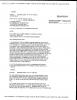
This cable shows Ambassador Roberts continuing to pursue leads and meeting with GOG officials. He comments that GOG Police Chief Cecil “Skip” Roberts’ approach to the Rodney case is plausible although he is known for his loyalty to Prime Minister Burnham. The problem is obtaining conclusive evidence that Rodney’s death was not the result of an accident. GOG officials whom Ambassador Roberts met repeated the same reasoning – that Rodney’s death was “justifiable self-defense by the GOG since he had been planning the violent overthrow of the government.” The ambassador advises continuing “our low profile policy and our avoidance of new initiatives which might be interpreted as supportive of the GOG.”
Document 18
Freedom of Information Act request
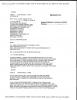
Richard Dwyer, formerly the DCM in Georgetown, became American consul in Martinique in early July 1980. From his new location, he pursued the Rodney investigation and visited the Cayenne location of a seafood company where Rodney murder suspect Gregory Smith was believed by some to be an employee. The company’s manager, Bill Charron, proved eager to talk about the case and indicated he was a friend of GDF Chief of Staff Norman McLean, who was reported to have orchestrated Smith’s covert departure from Guyana. Sources whose names he could not reveal told Charron that Smith was a GOG double agent and responsible for giving the Rodney brothers an explosive device. The plan, he claimed, was to alert GOG security forces that the Rodney brothers were in possession of a bomb and then arrest them. However, the device reportedly went off accidentally. Why the Rodney brothers wanted the device was not explained by Charron. Dwyer told Charron that various accounts including ones similar to his were circulating in Georgetown but always “seemed to depend upon the motives of the teller.” Charron insisted his sources “knew the facts of the matter.”
NOTES
[1] "Twelfth Parliament of Guyana First Session (2020 – 2021) National Assembly Resolution No. 23” New
[2] For examples of recent news coverage, see Stabroek News, “National Assembly adopts findings of Walter Rodney inquiry,” August 12, 2021; Stabroek News, “Gov’t to set record straight on Walter Rodney assassination, honour legacy,” June 11, 2021.
[3] Richard A. Dwyer Oral History Interview for Foreign Service Institute by Charles Stuart Kennedy on 12 July 1990, pp. 58 -59. The Association for Diplomatic Studies and Training Foreign Affairs Oral History Project, copyright 1998 ADST.
[4] Claudia Mitchell-Kernan,“Troubled Little Guyana’s Problems Extend Far Beyond Jonestown,” Los Angeles Times, August 26, 1979.
[5] “Impact of Cuban-Soviet Ties in The Western Hemisphere, Spring 1980,” Hearings Before the Subcommittee of the Committee on Foreign Affairs. House of Representatives. Ninety-Sixth Congress. Second Session. March 26, 27; April 16, 17 and May 14, 1980. Note: mentions of Guyana are on pages: 34, 59, 64, 65 73, 80,81, 91, 92, 94, and 101. See pages 115-116 for the answers Dr. Edward M. Collins, vice director for foreign intelligence, Defense Intelligence Agency, gave to written questions from Subcommittee Chairman Constantine “Gus” Yatron.
[6] Digital copies of the cables may be requested from the National Security Archive. Note that a previously released December 1979 cable is included with this posting because it summarizes the increasingly hostile events Rodney and his colleagues experienced after the Working People’s Alliance (WPA) declared itself a political party in June 1979.
[7] James L. Adkins and the CIA. For information on Adkins’ work for the CIA, see Ch. 22 of the Final Report of the Independent Counsel for Iran/Contra Matters. Volume 1 (August 4, 1993). However, information on him in the 1970s in Guyana is not included.
[8] Sam Silkin, “The Match at Guyana’s Powder Keg,” The Guardian (London), 16 June 1980, page 9.
[9] Cecil “Skip” Roberts, no relation to Ambassador Roberts, appears in Covert Action Information Bulletin article “Guyana: The Faces Behind The Masks” No. 10 Aug. – Sept. 1980 pp. 18 -25 as receiving INPOLSE training in the U.S. as part of the U.S. AID’s Office of Public Safety program, p. 20.
[10] Norman McLean, Guyana Defense Force (GDF) Chief of Staff appears in Covert Action Information Bulletin article “Guyana: The Faces Behind The Masks” No. 10 Aug. – Sept. 1980 pp. 18 -25 as receiving INPOLSE training in the U.S. as part of the U.S. AID’s Office of Public Safety program, p. 20.





