Pages

Monday, October 4, 2021

Peru: The Death Of A Salesman


PERU

Peru will cremate the remains of Abimael Guzmán, the founder of the Shining Path rebel group that caused tens of thousands of deaths in the South American country in the 1980s and 1990s. Guzmán died in prison on Sept.11 at the age of 86. An ex-philosophy professor and Maoist revolutionary, he was serving a life sentence on treason and terrorism charges.

As Reuters explained, the fate of his body after his death has been controversial. Peruvian authorities did not want to bury the late terrorist out of fear of creating a shrine for some who might see him as a martyr. His widow, who is still in jail on treason and terrorism charges, wanted to have his ashes but her request was denied.

Shining Path was one of many insurgencies in Latin American from the 1970s through the 1990s that began as an effort to enact leftist policies to help the poor, small farmers and others but evolved into a fighting operation. It, however, was “a totalitarian outlier, a Maoist cult of personality constructed to glorify Guzmán’s messianic fantasies,” wrote the New Yorker. On Mao’s birthday in 1980, for instance, Guzman ordered his followers to kill and mutilate street dogs in protest of then-Chinese leader Deng Xiaoping’s tolerance of free markets.

The public debate over the cremation illustrates how Peru is still grappling with the legacy of one of Latin America’s bloodiest rebel conflicts. “What is Guzmán’s place in the history of Peru?” asked Carlos Meléndez, a political analyst at Diego Portales University in Chile, in the Washington Post. “Without statues, without tombs, without pilgrimage sites, what will be the symbolism with which we bury Guzmán in Peru’s history?”

He noted that the reckoning with the past has yet to occur: The violence is “something that we as Peruvians have not yet collectively processed,” he said. “Many of the ingredients that caused the Shining Path to explode are still present.”

Ironically, Guzmán lived long enough to see the first Marxist-Leninist president of Peru, Pedro Castillo, assume power in July, no mean feat in a country which has, thanks to Shining Path, often demonized the left. Guzmán’s acolytes are members of Castillo’s cabinet and serve in the Peruvian Congress, noted a Wall Street Journal opinion piece. Castillo has been pushing to concentrate power in his office and install more Shining Path leaders throughout government, too.

Around 40 percent of Peruvians believe that some top officials harbor sympathies for the Shining Path, according to polls cited in the Rio Times, an English-language newspaper based in Brazil. Critics are waiting with “knives out” to stop Castillo if he missteps, wrote Jacobin, a leftwing news magazine. The president, meanwhile, faces poor odds. Peru has had four presidents since 2016. Prosecutors have charged three with corruption. A fourth committed suicide before his trial, Le Monde Diplomatique noted.

Still, Castillo condemned Guzmán’s violence after his death, distancing himself, perhaps, from the revolutionary’s worst impulses, Americas Quarterly wrote. But as the publication noted, that a leftist president now leads Peru shows how much the country has already moved on.


Thursday, September 30, 2021

Venezuela-Faith In Healing


VENEZUELA

As public services crumble in their authoritarian, socialist country, desperate Venezuelans are praying to José Gregorio Hernández, known as the “Doctor of the Poor” for their healthcare needs.

Recently beatified by the Vatican, Hernández gives hope to people who have lost faith in Venezuelan President Nicolás Maduro and opposition figures who have failed to loosen Maduro’s iron grip on power, held by torture and other violence, the weakening of the judicial system, suppression of human rights and other heavy-handed policies.

The image of Dr. Hernández – a mustachioed man in a black suit, white lab coat and bowler hat – is iconic in Venezuelan culture, the New York Times wrote.

“He’s a civilian that actually served other civilians, and that seems to be an ideal that is shared by both parties,” Columbia University doctoral fellow Daniel Esparza told the Times. “We’re orphans when it comes to role models – that’s when José Gregorio jumps in.”

Between Maduro’s incompetence and American sanctions on his regime and the Venezuelan economy, the South American country’s healthcare system is collapsing. Malaria cases in Venezuela increased at the highest rate in the world in 2019. Diseases like diphtheria and measles, which can be controlled with vaccines, are spreading.

Healthcare is only one piece of Venezuela’s decline. Lack of investment and hyperinflation have gutted agriculture and distribution in the country, added Reuters. To stock empty shelves at grocery stores, Maduro is privatizing companies that his predecessor, Hugo Chavez, nationalized as part of a leftist campaign to improve life for the country’s poorest citizens.

Meanwhile, the water infrastructure and other utilities, as well as cultural sites like museums and other attractions built in the oil-rich country in the 1960s and 1970s, are crumbling, reported Bloomberg. The financial news agency described gas as a “luxury” for Venezuelans. In Caracas, residents reported having to pay a bribe of $100 to fill up on gasoline.

Some Venezuelans, perhaps inspired by Hernández, are taking matters into their own hands. For example, underpaid healthcare workers are tabulating Covid-19 data to help their colleagues fight the virus, wrote Nature. Official government statistics mask the scope of the problem, they said.

Maduro and opposition figures recently pledged to work together more closely to improve services, especially those vital to stopping the spread of Covid-19, the Associated Press wrote.

Their bright idea was the way it’s supposed to be in the first place, of course.

Tuesday, September 28, 2021

Could Brasil Be Headed FOr Another Military Dictatorship?

 Madame President:

       Your morning briefing...President Bolsonaro of Brasil has made the following pronouncement:
     "Only God can remove me from office."
     Brasilians you are about to face a constitutional crisis as we faced in this country up to early this year. Fortunately for us, the military refused to side with Donald Trump. Will the Brazilian military take the side of Bolsonaro? Will we have another military dictatorship in Brasil like the one that I lived through from 1975-1980? Two of our readers were commissioned officers in the Brasilian Army. They might have some ideas.
      We saw some rain yesterday morning and even last night. Let us hope this is a good omen that we will not have a dry winter.
Be careful out there!
Stay "Far from the maddening crowd."
Amo-a,
-JackW

Tuesday, September 21, 2021

Argentina: Capybaras At The Gate


ARGENTINA

Capybaras at the Gate

Giant rodents called capybaras have invaded an affluent gated community to the north of Buenos Aires in Argentina, where they call the cute, dog-like animals carpinchos. As residents of the well-known Nordelta community complained about the pests in the media, progressives reacted with glee, politicizing the story.

“My total support for the Peronist carpinchos of Nordelta recovering their habitat,” wrote a Twitter user who was quoted in the Guardian, alluding to the South American country’s historically dominant political ideology.

The schadenfreude could stem in part from how ordinary Argentines who already live in an unequal society have fared far worse than their wealthy counterparts since the coronavirus pandemic began.

As Al Jazeera reported, lack of access to the internet has made remote learning nearly impossible for poorer Argentines. Impoverished children who don’t go to school also missed out on school lunch programs that gave them the nutrition they need to grow.

In Latin American countries, including Argentina, more than 60 percent of the new jobs are informal, Bloomberg added. They pay in cash. They don’t include contracts. Argentine informal workers saw their pay plunging by more than 20 percent during the pandemic. Formal, or on-the-books workers, on the other hand, saw wage increases of 1 percent.

The Argentine government, helmed by President Alberto Fernandez, a Peronist, continues to spend mightily, fueling inflation of 50 percent while also negotiating with the International Monetary Fund over $45 billion in debt. The questions that arise in that climate have created a “cloud of uncertainty” over the country’s political and economic future, wrote the Financial Times.

Voters in a recent preliminary midterm election gave opposition candidates big majorities, a sign of discontent with the Peronist rule. But, as another Bloomberg story explained, the preliminary election was only a kind of public opinion poll or dress rehearsal for the legislative election on Nov. 14.

Writing in Americas Quarterly, National University of Río Negro Political Scientist Maria Esperanza Casullo took a different view. She noted that, despite frustrated voters and economic uncertainty, Argentina’s political system is relatively stable. Coalitions of different parties have created a robust democracy in a country ruled by a military junta from 1976 to 1983.

The country famously has resources that can be harnessed to help its citizens if the politicians can overcome partisan infighting, Reuters reported. Miners in the country’s remote north, for example, are drilling away at the world’s third-largest reserve of lithium, an essential component of the batteries used in electric vehicles and for other applications.

How that wealth should be used is a question Argentine voters surely want to be answered.


Wednesday, September 8, 2021

Jair Bolsonaro Sets The Stage


BRAZIL

Setting the Stage

Thousands of protesters supporting populist President Jair Bolsonaro marched in multiple Brazilian cities during the country’s independence day Tuesday in a series of rallies that have raised fears about a potential coup in Latin America’s biggest democracy, the Guardian reported.

Footage showed Bolsonaro’s supporters clashing with police in the capital, Brasilia, as authorities tried to prevent demonstrators from storming Brazil’s congress.

Local media reported some of the protesters also vowed to storm the Supreme Court, while others were calling for Bolsonaro to use the country’s military to launch a coup.

The Independence Day protests come as the embattled president’s approval ratings continue to plummet due to corruption scandals involving his allies and relatives, and his handling of the coronavirus pandemic that has killed more than 580,000 people. Brazil ranks second in the world after the US in the total number of deaths from the virus.

Bolsonaro called for the rallies amid an ongoing row with two Supreme Court justices, who have launched probes into the president for posting confidential material on social media to discredit next year’s elections as fraudulent, Newsweek reported.

Critics say the far-right leader is trying to gather enough supporters to intimidate or overthrow judges.

On Monday, more than 150 political figures on the left published an open letter warning that Tuesday’s rallies were a danger to Brazil’s democracy.

G

Tuesday, September 7, 2021

Coup Participants Face Justice In Bolivia


BOLIVIA

Testing the Scales

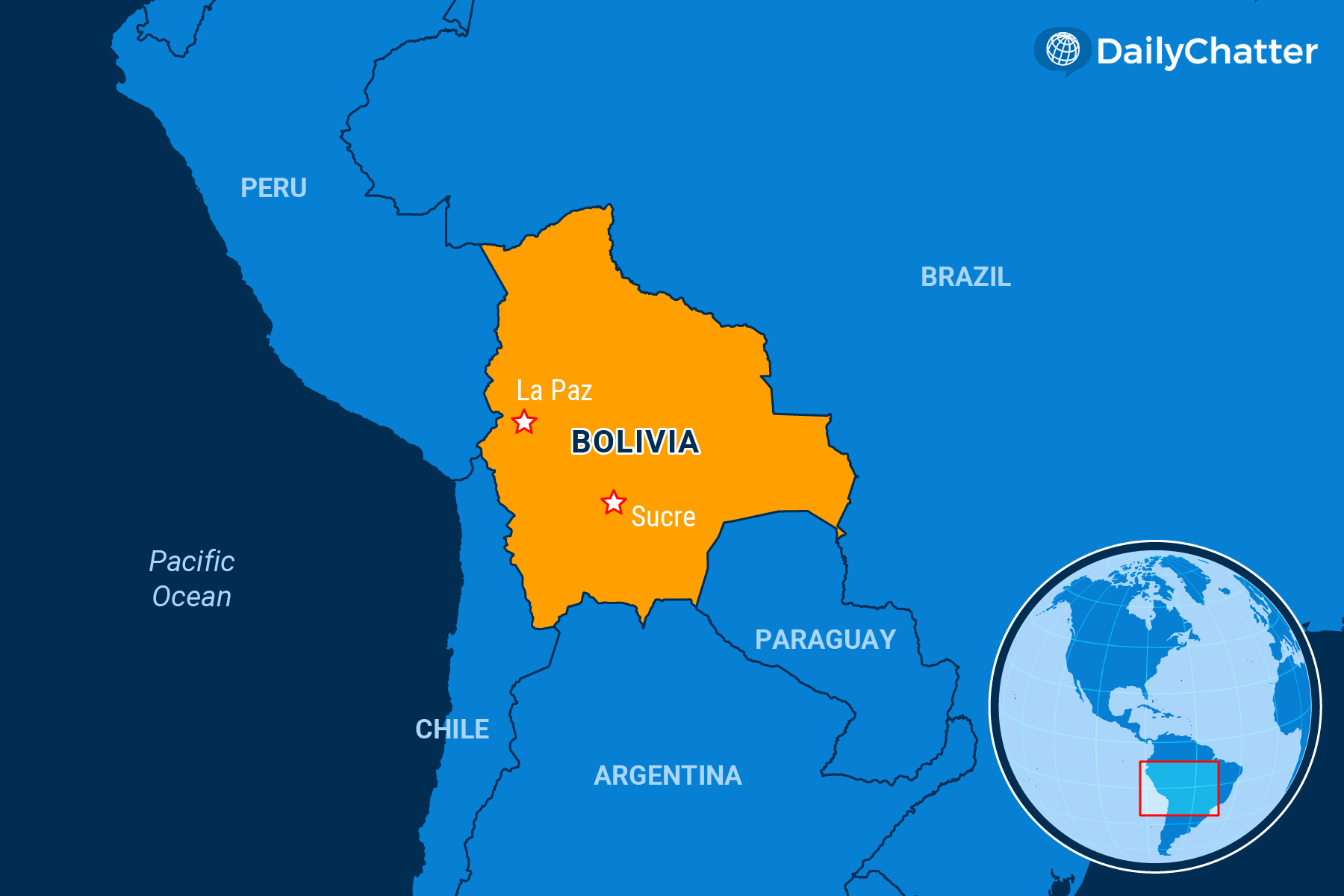
A lot is capturing Bolivians’ attention these days. Wildfires are raging through the forests. Cases of Covid-19 are rising again. Its national soccer team is playing the World Cup qualifiers. But what really has the country mesmerized – and polarized – is the fate of former Interim President Jeanine Anez – she was arrested in March for staging a coup that ousted ex-President Evo Morales and sanctioning violence against her political opponents.

Bolivians are divided over seeing her as a victim of a political witch hunt or as a former tyrant who is finally receiving her comeuppance.

Anez famously carried a leather Bible into the country’s presidential palace in November 2019 after Morales fled the country. The ousted president had replaced the Christian text with “acts honoring the Andean earth deity called the Pachamama” at official public ceremonies. A socialist who was wildly popular among working-class voters, Morales was the first indigenous Bolivian to become the country’s head of state, as the BBC explained. He had been in office for 14 years and had stirred controversy for winning a fourth term due to fraud, critics alleged.

After his departure, Morales’ party, the Movement for Socialism, staged protests that elicited a brutal crackdown and resulted in 20 dead and almost 100 injured in late 2019. As the Associated Press noted, the Organization of American States released a scathing report that said Bolivian security forces tortured and executed Morales’ supporters.

Last year, however, Anez’ political fortunes turned. Morales’ former economy and public finance minister, Luis Arce, won the presidency. His win solidified public support for Morales’ civil rights and economic agenda, the New Republic wrote. Arce vowed to bring to justice the plotters who brought about Morales’ ouster, Agence France-Presse wrote.

Now, it is the question of whether and how to prosecute those responsible for the violence that followed Morales’s resignation that is testing this politically volatile South American nation, wrote the Washington Post. “Since Bolivia lacks an independent judicial system, it will be very difficult to have an impartial investigation into these allegations,” César Muñoz, a senior researcher with Human Rights Watch, told the newspaper.

Meanwhile, writers at the Economist and elsewhere wondered whether Arce’s administration would pave the way for Morales to return. But Arce is not waiting on his former boss to give him direction.

Recently, Bolivian prosecutors charged Anez with genocide stemming from the deaths of 20 protesters in 2019, Reuters reported. Soon after, Anez attempted to commit suicide. Changing their usual mantra claiming that Anez is the target of a political conspiracy, her lawyers told Al Jazeera that “she feels very harassed” and that her actions were a “cry for help.” The European Union, the US and other countries have expressed concern.

Mercy or punishment – that’s the question for Bolivia’s justice system now. And how it answers will show its commitment to justice.

W

Friday, August 27, 2021

Fighting For The Property Rights Of Indigenous People In Brasil


BRAZIL

Tug-of-War

Thousands of Indigenous people have been camped out on the streets of Brasilia this week, intent on putting pressure on Supreme Court justices who are due to start considering a case that will have far-reaching implications for their land rights, the Associated Press reported.

The 6,000 protesters from 173 ethnic groups are worried about a case that involves a lower court’s ruling that invalidated a claim by some Indigenous people in Santa Catarina state to what they say is their ancestral territory. The lower court based its decision on allegations that the group wasn’t occupying the land in October 1988, when Brazil’s constitution was signed after the nation’s return to democracy. The group denies that.

Protest organizers say the court’s decision could be “the ruling of the century,” because eliminating the 1988 benchmark would force judges across the country to impose that on similar pending cases and would affect a bill being considered in the legislature that would loosen protections for Indigenous lands.

President Jair Bolsonaro said Wednesday that overturning the lower court’s ruling would prompt new requests to officially recognize hundreds of Indigenous territories and create “chaos,” the AP wrote. He has repeatedly argued that Indigenous people control far too much land relative to their population size — their territories cover 14 percent of Brazil, mostly in the Amazon.

Other proponents of the bill, which include farming groups, say the 1988 cutoff date provides legal certainty regarding property law.

But Indigenous groups and their supporters say it ignores the fact many Indigenous people had been forcibly expelled from their lands, particularly during the military dictatorship or may not have formal means to prove their prior presence. And other critics, which include the UN and Human Rights Watch, say the case is really about allowing big businesses to exploit Indigenous lands.

Pi Surui, from the 7 de Setembro village in the Amazon rainforest state of Rondonia, said he had come to the capital to make clear that Indigenous territory is more than just land. “It is sacred, our history, our life,” he told the AP.

Brazil has 421 officially recognized Indigenous territories that are home to 466,000 people.

E