Pages

Monday, September 25, 2023

The Fight For The Richts Of Indigenous People In brasil


Inch by Inch

BRAZIL

Brazil’s Supreme Court ruled against efforts to strip back Indigenous land rights, a verdict that many Indigenous communities and advocates hailed as a historic victory for the country’s original inhabitants, the Guardian reported.

The case centered on a lawsuit brought by the Santa Catarina state – with backing from farmers and agribusiness groups – seeking to block an Indigenous group from expanding the size of its territorial claim.

The state based its argument on the legal theory that Indigenous people should have either physically occupied the land or initiated legal actions to regain territory when Brazil’s Constitution took effect on Oct. 5, 1988, according to the Associated Press.

Dubbed the “time-limit trick,” Indigenous groups and advocates countered that this theory could be used to dismiss any number of legitimate claims for delimitation of native lands. They added that the timeline was unjust as it failed to consider the forced expulsions and displacement of Indigenous communities, notably during the two-decade military dictatorship in Brazil.

In its ruling, nine of 11 judges rejected the Brazilian state’s argument, saying that areas occupied by the Indigenous people or linked to their ancestry and tradition “have constitutional protection, even if they are not demarcated.”

The verdict was welcomed by advocates and Indigenous leaders, including Brazil’s Minister for Indigenous Peoples, Sônia Guajajara, who called it “a great achievement” resulting from years of struggle and protests.

Opponents meanwhile lamented its impact on business.

Legal observers said the court’s ruling will impact hundreds of administrative procedures and legislative efforts that affect Indigenous lands.

Official data shows that Indigenous lands are about 14 percent of Brazil’s territory. Still, the process to officially establish Indigenous territory could take decades.



Friday, September 22, 2023

Argentina Torture Site Is Now UNECO World Heritage Site


The Unforgotten

ARGENTINA

The United Nations Educational, Scientific and Cultural Organization (UNESCO) designated a former Argentine detention center as a world heritage site this week, a decision seen as significant to remembering human rights abuses that occurred during the country’s authoritarian rule four decades ago, Al Jazeera reported.

Located in the capital of Buenos Aires, the Navy School of Mechanics (ESMA) initially served as an educational facility for the country’s navy, but was later transformed into a site of torture and brutality following the 1976 military coup.

The junta, which ruled until 1983, became known for its widespread human rights abuses in its attempt to eliminate dissent, activism and left-wing political views. As many as 30,000 people disappeared while in military custody. To this day, many disappearances remain unresolved.

There were up to 340 detention centers that sprung up during that period, with ESMA being one of the first.

It even featured a maternity ward where newborns were taken from their mothers, often to be adopted by families associated with the dictatorship. The military regime took extensive measures to hide the crimes committed at ESMA, both during and after the dictatorship.

In 2007, ESMA was reopened as a museum and memorial site, allowing the public to learn about the atrocities that occurred within its walls. Recent additions to the museum’s exhibits include an airplane used in “death flights,” a practice in which drugged detainees were thrown into the sea mid-flight.

UNESCO’s designation for ESMA underscores its historical significance and serves as a reminder of the importance of acknowledging past human rights abuses, the news organization wrote. It is particularly relevant in Argentina’s current political climate, where some high-profile politicians, such as far-right presidential candidate Javier Milei, have been accused of downplaying the brutality of the military dictatorship.

In an address to the UN, President Alberto Fernández emphasized the importance of preserving the memory of such horrors to prevent their recurrence.


Tuesday, September 19, 2023

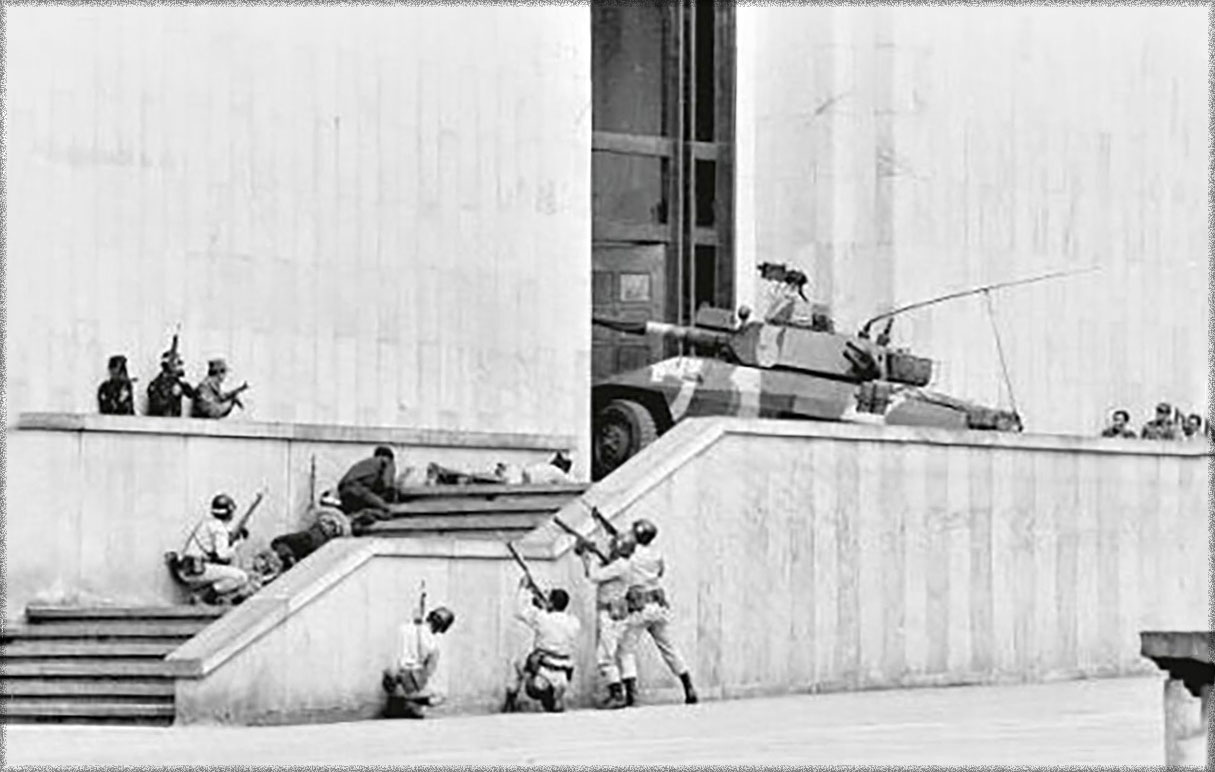
Black November: THe US and 1985 Palace of Justice Tragedy In Colombia


35+ YEARS OF FREEDOM OF INFORMATION ACTION