Pages

Tuesday, January 3, 2023

Brasilian Authorities Will Revive Criminal Case Against US Congressman George Santos


Brazilian Authorities Will Revive Fraud Case Against George Santos

A 2008 court case had been suspended because Brazilian law enforcement officials could not find Mr. Santos.

Representative-elect George Santos campaigns in the days before being elected to the House.
Although George Santos had once admitted to using a stolen checkbook in Brazil, he now asserts that he is not a criminal “here or in Brazil.”Credit...Mary Altaffer/Associated Press
Representative-elect George Santos campaigns in the days before being elected to the House.

3 MIN READ

When Representative-elect George Santos takes his seat in Congress on Tuesday, he will do so under the shadow of active investigations by federal and local prosecutors into potential criminal activity during his two congressional campaigns.

But an older criminal case may be more pressing: Brazilian law enforcement authorities intend to revive fraud charges against Mr. Santos, and will seek his formal response, prosecutors said on Monday.

The matter, which stemmed from an incident in 2008 regarding a stolen checkbook, had been suspended for the better part of a decade because the police were unable to locate him.

A spokeswoman for the Rio de Janeiro prosecutor’s office said that with Mr. Santos’s whereabouts identified, a formal request will be made to the U.S. Justice Department to notify him of the charges, a necessary step after which the case will proceed with or without him.

The criminal case in Brazil was first disclosed in a New York Times investigation that uncovered broad discrepancies in his résumé and questions about his financial dealings.

Just a month before his 20th birthday, Mr. Santos entered a small clothing store in the Brazilian city of Niterói outside Rio de Janeiro. He spent nearly $700 using a stolen checkbook and a false name, court records show.

Mr. Santos admitted the fraud to the shop owner in August 2009, writing on Orkut, a popular social media website in Brazil, “I know I screwed up, but I want to pay.” In 2010, he and his mother told the police that he had stolen the checkbook of a man his mother used to work for, and used it to make fraudulent purchases.

Sign up for the New York Today Newsletter  Each morning, get the latest on New York businesses, arts, sports, dining, style and more. 

A judge approved the charge in September 2011 and ordered Mr. Santos to respond to the case. But by October, he was already in the United States and working at Dish Network in College Point, Queens, company records show.

Despite his earlier confessions, Mr. Santos has recently denied any criminal involvement, telling The New York Post, “I am not a criminal here — not here or in Brazil or any jurisdiction in the world.”

Joe Murray, a lawyer for Mr. Santos, said on Monday, “I am in the process of engaging local counsel to address this alleged complaint against my client.”

Mr. Santos’s swearing-in on Tuesday as the representative of New York’s Third Congressional District was already set to take place amid a cloud of scrutiny.

Last week, irregularities in Mr. Santos’s campaign spending emerged, including $40,000 on flights and payments for rent that are linked to an address where Mr. Santos is reported to be staying, a possible violation of the ban on using campaign funds for personal expenses.

Mr. Santos also lied about graduating from college and had misled voters about having worked for Citigroup and Goldman Sachs. He also acknowledged owing thousands of dollars in unpaid rent, and withdrew his claim that he owned multiple properties.

The next step for Brazilian prosecutors is to file a petition when the courts reopen at the end of the week requesting that Mr. Santos respond to the charges against him. A judge would then share the request, called a rogatory letter, with the federal Justice Ministry in Brazil, which would share it with the U.S. Department of Justice. Neither the Justice Department nor Brazilian authorities can compel Mr. Santos to respond at this point. But Mr. Santos must be officially notified in order for the case to proceed.

A criminal conviction, even for a felony, is not on its own an act that would disqualify a congressional member from holding office. The last time a member of Congress was removed from office for breaking the law was in 2002, when James A. Traficant Jr. was removed from the House after his conviction on felony racketeering and corruption charges.

If Mr. Santos does not present a defense in the Brazilian case, he will be tried in absentia. If found guilty, Mr. Santos could receive up to five years in prison, plus a fine.

Manuela Andreoni and Michael Gold contributed reporting.

Grace Ashford is a reporter on the Metro desk covering New York State politics and government from the Albany bureau. She previously worked on the Investigations team. @gr_ashford

A version of this article appears in print on Jan. 3, 2023, Section A, Page 11 of the New York edition with the headline: Prosecutors in Brazil Will Revive Fraud Case Against Embattled New York Politician. Order Reprints | Today’s Paper | Subscribe

Monday, January 2, 2023

Colombia Continues Negotiations With Rebel Groups


Half Peace

COLOMBIA

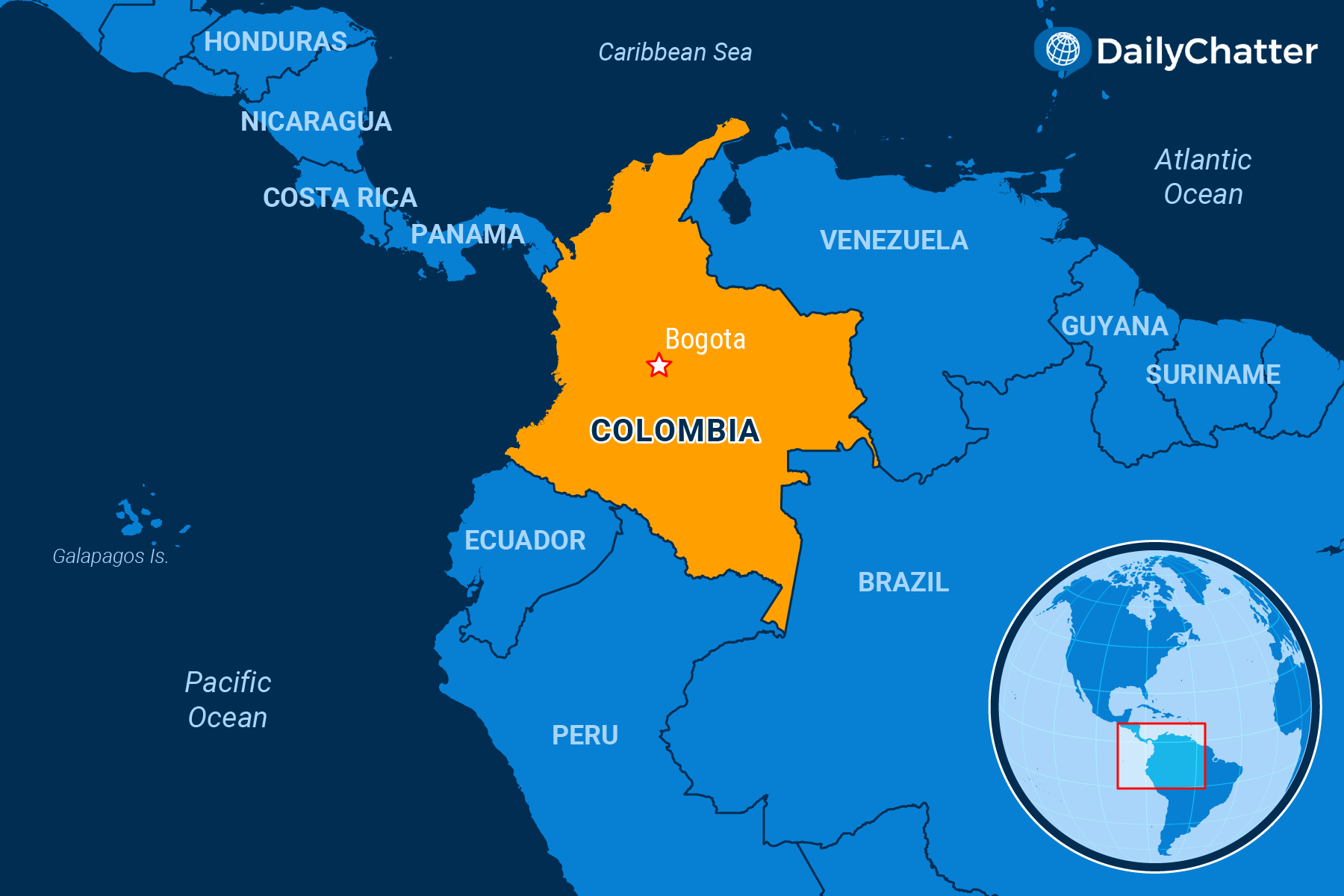
The Colombian government agreed to a six-month ceasefire with the five largest armed groups in the country, a truce that is part of leftist President Gustavo Petro’s efforts to end decades of conflict in Colombia, Agence France-Presse reported.

Petro announced the ceasefire on New Year’s Eve, adding that it could be extended “depending on progress in the negotiations.” Among the groups participating in the deal are the leftist insurgency group, the National Liberation Army (ELN), and two splinter factions of the now-demobilized Revolutionary Armed Forces of Colombia (FARC).

The announcement comes as the Colombian government is continuing to negotiate with various armed groups to end more than 50 years of conflict between the state and groups of left-wing guerrillas, right-wing paramilitaries, and drug traffickers.

A landmark 2016 peace deal put an end to years of conflict between the government and the leftwing FARC rebels.

Following his election victory last year, Petro – a former guerrilla fighter and Colombia’s first leftist president – vowed to negotiate with all Colombian armed groups as part of a “total peace” policy.

Since November, the government has been engaged in peace talks with ELN rebels – the last recognized insurgency group in the country.

Even so, the Colombia-based Institute for Development and Peace Studies (Indepaz) warned that the violence in the country continues as armed groups fight over drug trafficking revenues and other illegal businesses.

There are currently around 90 political and criminal groups operating in the country, according to the think tank.


Venezuela-Changing Strategies


Change of Strategies

VENEZUELA

Venezuela’s opposition voted to dissolve the country’s interim government this week, putting an end to the leadership of Juan Guaidó, who had been attempting to oust the authoritarian government of socialist President Nicolás Maduro for years, the New York Times reported.

The vote was the second one last month to determine the fate of Guaidó’s interim presidency, whose influence has waned in recent years as Maduro has remained in power.

The parallel government began in 2019, when Guaidó – at the time the head of Venezuela’s parliament – invoked the constitution to declare himself the country’s interim leader. The opposition leader has accused Maduro of being an illegitimate ruler following his re-election in disputed polls in 2018, the BBC noted.

Guaidó’s move received international backing with many nations, including the United States, recognizing him as Venezuela’s leader. But his support began to falter after he failed to force Maduro out, including an unsuccessful attempt to spark a military uprising against the leftist leader.

US sanctions designed to assist Guaidó only ended up gutting government revenues and forced many Venezuelans to focus on daily survival, instead of political mobilization.

Other countries, meanwhile, have also backed away from recognizing Guaidó as interim leader, while new leftist governments in Latin America have taken a softer approach toward Maduro.

The dissolution is a major blow to US efforts to oust Maduro and underscores efforts by the opposition to seek different strategies.

Even so, the US has softened its stance toward Maduro’s government in recent months, while the Venezuelan government and the opposition have sought to revive stalled negotiations to end the country’s ongoing crisis.

Since 2014, oil-rich Venezuela has been grappling with economic, political, and humanitarian crises that have shattered the country’s democratic institutions and left much of the populace impoverished.


Thursday, December 29, 2022

Uruguay: When Dullness Is A Virtue


When Dullness Is a Virtue

URUGUAY

Most Uruguayans bristle at the notion of patriotism.

Leave that to Argentina, Uruguay’s southern neighbor, they say, or to Brazil, the behemoth to the north. Uruguay – with the possible exception of when its national soccer team is in action – is just fine being Uruguay: Low-key and earnest, a mix between old-fashioned and progressive, and by many accounts a little dull.

“The joke is that our country is a little like its geography,” Adolfo Garce, a political scientist at Uruguay’s University of the Republic, told DailyChatter. “We’re a flat country, without mountains or volcanoes, no tsunamis, no earthquakes. We’re all about moderation. We’re the country of gradual changes.”

Still, talking to Uruguayans, it doesn’t take long for a kind of quiet patriotism to come to the surface.

They are proud to tell you the country was the first in the Americas to give women the vote. And they boast of being in Latin America’s top tier in workers’ rights, literacy rates, and health care. Locals also are quick to mention the country’s progressive bona fides: Divorce was legalized in 1907, gay marriage has been legal since 2008, abortion since 2012, and recreational cannabis since 2013.

There are achievements, analysts say, that serve as a model for the region: Almost no one in the country lives in extreme poverty, for example, and in percentage terms, Uruguay has the largest middle class – two-thirds of the population – and the lowest level of income inequality in the Americas, according to the World Bank. Its economy grew a whopping 7.7 percent year-on-year in the second quarter of 2022, regional newspaper MercoPress reported, outpacing the growth of most of its neighbors.

Its economic steadiness and free-market policies attract investment, especially in its booming tech sector. That’s where entrepreneurs from Argentina, fed up with the economic chaos there, are helping to fill labor gaps holding back this industry, reported Rest of World, a publication that covers global tech. Tax breaks for foreigners and software companies don’t hurt. Neither does the provision of laptops for every student in the country.

One factor that helps distinguish Uruguay from its neighbors is its stability in politics. The county has the “longest (lived), most stable democracy in the region,” the publication added, with a tradition of multiparty consensus, institutional measures to protect democracy, and approval ratings for its presidents that other leaders could only dream about. In global rankings measuring aspects such as political rights and civil liberties, Freedom House ranked it “free” and was topped only by the Scandinavian countries, Canada, Finland, New Zealand, and the Netherlands.

While Uruguayans and outsiders universally praise the small country’s achievements – its population of 3.5 million is around a quarter that of the cities of Buenos Aires or Sao Paulo –there’s much less of a consensus on what allowed this small nation sandwiched between the continent’s two largest countries to be able to go its own way.

“The roots of national identity are always a bit of a mystery,” Garce said. “For Uruguay, that is especially true.”

The most common theory attributes the country’s personality to history and geography. It has a lack of natural resources and cheap labor – Indigenous tribes ended up helping the continent’s second-smallest country by area because its size had led to Uruguay being overlooked and undervalued. That meant European settlers were there for the long haul, not to conquer, pillage, and return home. In fact, in colonial times, Uruguay was known plainly as Banda Oriental del Uruguay (East Bank of the Uruguay River), a kind of no-man’s land created as a buffer between Spain’s interests in Argentina and Portugal’s in Brazil.

Later, that lack of resources forced it to diversify its economy and avoid the “reverse resource curse” which holds that being resource-rich often leads to corruption and repression, and depresses entrepreneurship, wrote World Politics Review.

Still, issues linger from troubled periods in decades past.

A military dictatorship in the 1970s and 1980s, including widespread assassinations and systematic human rights abuses, is something many think the country is too eager to turn a blind eye to, as UN officials pointed out recently. Desaparecidos, an organization for human rights in the country, says many of the 300 people who “disappeared” in that period are still not accounted for.

Jose Mujica, a former Uruguayan president who earned global headlines as the “world’s humblest head of state,” first rose to prominence as a leftist revolutionary who was tortured and jailed under the military government in that period. He earned that moniker after taking office in 2010 by eschewing the presidential palace, motorcades, elaborate ceremonies and most of his salary, and by arriving at official meetings in his old Volkswagen Beetle.

More recently, a corruption scandal reaching high into the government of President Luis Lacalle Pou is alleged to have provided bogus Uruguayan passports for scores of wealthy Russians looking to flee their country following the start of the war with Ukraine, noted Insight Crime.

That scandal has had an outsized impact in the only country in the region where a majority do not believe that the wealthy buy political influence, the Economist noted, and one that ranks up there with Australia, Japan, and Belgium on Transparency International’s most recent corruption index.

Still, most agree the country is still getting something right. The New York Times recently held Uruguay up as a potential model of environmental sustainability, a country that has nearly joined the club of developed countries while keeping greenhouse gas emissions around the global mean.

That makes Uruguayans proud, if not patriotic.

— Eric J. Lyman for DailyChatter


Tuesday, December 20, 2022

Peru-Rule By Chaos


Rule By Chaos

PERU

Foreign tourists were recently stranded at Machu Picchu, the 15th-century Incan citadel and UNESCO World Heritage Site, CNN wrote, amid a major political crisis in Peru. Officials declared a state of emergency, reported the Associated Press, shutting public transportation amid violent protests over the fate of ousted President Pedro Castillo. Anti-government protesters, meanwhile, closed down the airport, NBC News added.

The crisis exploded earlier this month after Castillo announced his intention to dissolve Congress and unilaterally take over control of the government, a move even some supporters called a “coup.” Soon after they heard the news, lawmakers overwhelmingly voted to impeach Castillo on charges of conspiring to spark a rebellion, as USA Today reported. President Dina Boluarte, the former vice president and now the South American country’s first female president, then replaced Castillo.

She is the sixth president in five years. And her government is already teetering toward collapse.

A former schoolteacher and union organizer who had never held office and campaigned last year as a leftist who would shake up the country’s economic system, Castillo governed as a moderate as he battled his political foes.

Prosecutors have accused him of running a corruption ring that benefits from public spending, Al Jazeera noted. Castillo has countered that those allegations are politically motivated. He sought to suspend congress, he said, because his rivals were seeking to block his agenda, which was popular among the majority of Peruvians who put him in office.

Peruvian police reportedly arrested Castillo on his way to request asylum at the Mexican embassy in the capital of Lima. As Axios explained, the Mexican government is considering his request as he awaits trial. Castillo’s lawyers wrote a letter to Mexican officials arguing that Castillo was ousted and detained for “mere announcements of will or intention that do not constitute any criminal offense.”

Meanwhile, Castillo’s supporters are furious, according to the New York Times. Protests erupted, with clashes resulting in the deaths of at least 20 people and hundreds of injured civilians and police officers. Many poor and working-class Peruvians feel as if powerful elite forces had pushed a member of their community out of office just as they had achieved an opportunity to change Peru’s crushing inequality.

Hanging over these contretemps is Peruvian history. In the 1980s and 1990s, the communist Shining Path rebellion blew up cars and assassinated leaders. The counter-insurgency response was harsh. More than 70,000 people died in the civil war.

Celebrated in the early 2000s for ending a cycle of dictatorship by ousting rightwing strongman Alberto Fujimori, Peru has more recently lurched from crisis to crisis, the Christian Science Monitor noted. For example, there have been seven impeachment attempts since 2016 along with a flood of corruption scandals centering on the political class. Three former presidents have been arrested, and a fourth killed himself to avoid arrest.

As a result, entrenched corruption has deepened distrust in institutions, making way for virulent conspiracy theories capitalizing upon and fueling growing tribalism and leading to a state of constant turmoil, say analysts.

Meanwhile, the domestic dispute also threatens to ensnarl regional powers. Argentina, Colombia and Mexico supported Castillo’s rise to power, Bloomberg noted. Chile, Costa Rica, Ecuador, and Uruguay voiced their support for Boluarte.

Now it’s a toss-up as to whether the courts, legislators or the mobs decide who wins

Friday, December 9, 2022

Peru's President Gets Fired!


End of the Line

PERU

Peruvian authorities detained President Pedro Castillo this week after the embattled leftist leader attempted to shutter parliament and rule by decree, the Guardian reported.

Castillo’s removal and detention came as he faced an impeachment vote from lawmakers Wednesday. The president had earlier announced that he would temporarily shut congress, launch a “government of exception” to rule by decree and call for new legislative elections.

He also ordered a night-time curfew and the restructuring of the judiciary and prosecutor’s office, which is investigating him for alleged corruption and influence peddling – allegations which he denies.

But his countermoves prompted a mass resignation by members of his cabinet and the withdrawal of support from Peru’s security forces. Congress voted to remove him and the country’s constitutional court labeled his attempt to dissolve the legislature as “a coup.”

The public prosecutor’s office said the outgoing president has been charged with allegedly “breaching constitutional order.”

Vice President Dina Boluarte was sworn in as the country’s president, becoming the first female head of state in Peru’s history. Boluarte – who also condemned Castillo’s move – called for a political truce and the installation of a national unity government.

Castillo’s removal ends a months-long political crisis that had gripped the South American country. Elected in June 2021, his tenure has seen five cabinets, more than 80 ministers, six criminal investigations and two failed attempts to impeach him.

The former schoolteacher and union activist had pledged to support poor Peruvians and his win was seen as the result of disenchantment with Peru’s political elite after numerous corruption scandals.

Still, observers noted that the leader made numerous mistakes, including picking barely qualified ministers and garnering allegations of corruption and influence peddling tied to his family and associates.


Wednesday, December 7, 2022

Chile's First Lady Resigns!!


Quitting, Loudly

CHILE

Irina Karamanos recently resigned from her position as First Lady of Chile. She is still Chilean President Gabriel Boric’s partner. The 33-year-old Santiago-based anthropologist, feminist and political organizer simply didn’t want a public position based on that personal relationship.

Writing in the Washington Post, columnist Kate Cohen supported the decision. Karamanos initially accepted the role reluctantly, saying she could use it or reform it for the better. “But there’s no way to reform the role of first lady,” Cohen wrote. “It’s either sexist or antidemocratic or both.”

The former first lady’s move exemplifies how Boric, a leftist, is presiding over the country known as one of the most conservative and pro-free market in South America.

As the Australia-based Lowy Institute explained, the 36-year-old Boric became the youngest leader in Latin America when he assumed office in March. His victory was part of a wave of left-wing victories in the region, known as the ‘Pink Tide,’ where many voters now reject the conservative, pro-business views of past generations. Socialist Luiz Inácio Lula da Silva’s victory in the recent Brazilian presidential election over right-wing President Jair Bolsonaro was the latest example of the trend.