Brasil could see major social unrest with his election as Bolsonario refuses to leave office if he loses the election.
Friday, September 16, 2022

Monday, September 12, 2022
Friday, September 2, 2022
Chile's New Constitution-Out Of Touch
Out of Touch
CHILE

Technocrats, scientists, environmentalists, and other experts and policymakers love Chile’s proposed new constitution. As Nature detailed, the new founding document for the South American nation would “boost science, expand environmental protection and improve the nation’s education system.”
Problem is, few Chileans feel the same way.
The new constitution, which Chileans will approve or reject in a Sept. 4th referendum, is a symbol of the times. It would replace a constitution adopted more than 40 years under Augusto Pinochet, a military dictator who seized the country from a democratically-elected left-wing president in a US-backed coup.
Pinochet died in 2006. But, even as Chileans have since elected their leaders in democratic exercises, the system he created lived on. Conservatives at the Hoover Institution have praised the legacy system as capitalistic and pro-business, for example. In 2019, however, civil unrest broke out as Chileans took to the streets to protest inequality that they believed stemmed from deregulated markets and privatized social welfare systems, as the Guardian explained.
The new constitution would include environmental protections that stop private companies from gobbling up resources for profit while ordinary Chileans go without, for example, according to the Sierra Club. It would also limit the president to two consecutive terms, establish social rights to housing, food and other essentials and enshrine other progressive measures into law, Reuters added.
In 2020, Chileans voted to revise their constitution in a referendum. Scientists, educators, indigenous leaders rather than politicians, military officers and rich elites drafted the proposed constitution. In 2022, left-wing Gabriel Boric won the presidency on a campaign to welcome a new constitution.
Now it seems their plans might come to naught. Polls show that almost 46 percent of voters will give the document a thumbs down, reported Bloomberg. Only a third will approve it. Around 16 percent are undecided. Boric is already vowing to propose a new constitution if the no vote wins – not a good sign for proponents of change.
The arguments against change are legion, however. Writing in the Wall Street Journal, Adolfo Ibáñez University economist Axel Kaiser argued that the new constitution would undermine the freedom of the judiciary, destroy the country’s stable business climate and centralize government authority, eliminating crucial checks and balances that maintain social stability.
Moderate voters will be key to determining whether the new constitution becomes the law of the land, Americas Quarterly wrote. Voting is mandatory, so many might vote yes because they feel as if they had little choice but to enact change anytime soon even if they tell pollsters that they are leery about the document.
Wholesale change is, after all, scary.
Friday, August 26, 2022
Wednesday, August 24, 2022
Colombia To Legalize Cocaine????
Historic Shift
COLOMBIA
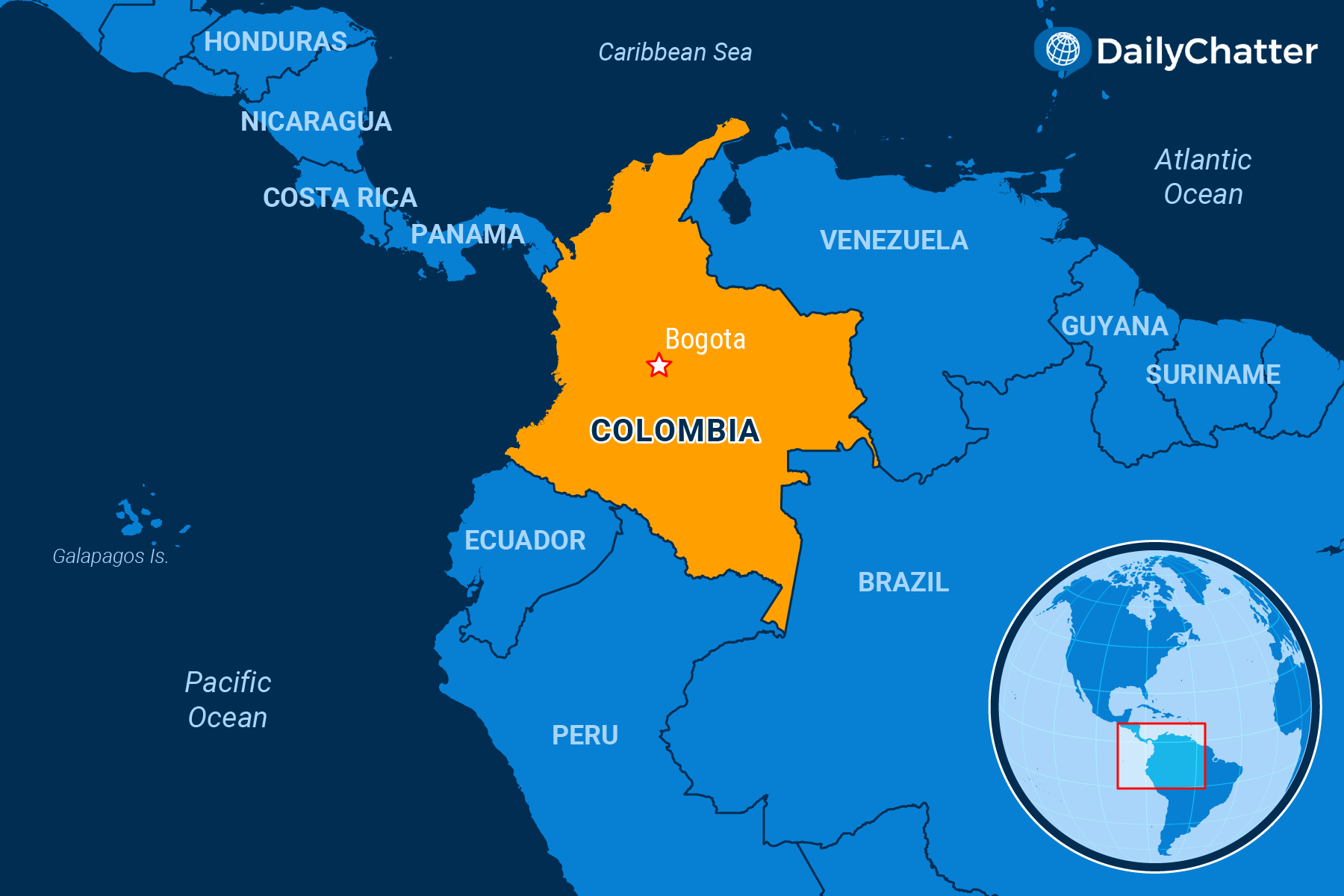
Leftist President Gustavo Petro proposed new plans to decriminalize cocaine in Colombia, in an effort to end the war on drugs despite concerns from its main ally the United States, the Washington Post reported.
Colombia, the largest producer of cocaine in the world, has been on the frontline of the war on drugs and has kept a long-standing – and profitable – counter-narcotics relationship with the US.
But the radical shift come a few months after Colombia’s truth commission released a final report criticizing the country’s decades-long war on drugs.
The commission, set up as part of Colombia’s 2016 peace accord between the government and the Revolutionary Armed Forces of Colombia (FARC), discovered that drug trafficking had contributed to the conflict’s prolongation, despite more than $8 billion in US military aid to the South American country to fight the drugs trade. At least 260,000 Colombians were killed in the fighting, the vast majority of them civilians, CNN noted.
The new Colombian government prepared its drug policy days before taking office on Aug. 7. Felipe Tascon, Petro’s drug policy coordinator, said the then-incoming president spoke of convincing world leaders that illicit drugs aren’t the problem, but its prohibitions, Colombia Reports wrote.
The legislation would also put an end to the aerial spraying and manual eradication of coca farms, which critics say has been targeting poor rural farmers.
US government officials, however, said they would not support the decriminalization proposal, noting that cocaine was responsible for an estimated 25,000 overdose deaths in the US in 2021.
A former US Drug Enforcement Administration (DEA) official, meanwhile, fears this will limit the agency’s collaboration with the Colombians on drug trafficking investigations from Bogota, Colombia, home to the largest DEA overseas office – and the world’s largest cocaine producer.
“Everyone would be fighting from the outside in,” he said.
Friday, August 19, 2022
Gang Violence In Ecuador
Collateral Damage
ECUADOR

Ecuadorian authorities arrested a suspect connected to a deadly weekend blast in the port city of Guayaquil, an explosion that marked an escalation of gang violence in the South American country, Agence France-Presse reported this week.
On Sunday, five people died and 17 others were injured when two individuals on a motorcycle threw a bag of explosives into a restaurant in the Cristo del Consuelo district of the port city.
Interior Minister Patricio Carrillo said the suspect “admitted to being involved in the terrorist attack” in the district.
The explosion rocked the country, prompting President Guillermo Lasso to declare a 30-day emergency in the city.
The recent attack underscores the ongoing problem of organized crime and drug trafficking in Ecuador, a country sandwiched between two of the world’s largest cocaine producers, Colombia and Peru.
According to United Nations data, Ecuador accounted for 6.5 percent of the cocaine captured worldwide in 2020. Feuding between rival gangs has reached the country’s prisons and has left more than 400 dead since February 2021.
Guayaquil has been particularly affected: The city experienced 72 of 145 explosive-related attacks in Ecuador this year, according to the government.
The city, which is also the home to the country’s main port, serves as a crucial hub for drug trafficking from Peru and Colombia.
Monday, August 15, 2022
Paraguay-Dirty Justice
Dirty Justice
PARAGUAY

Paraguayan Vice-President Hugo Adalberto Velázquez Moreno will step down from his post after the US blacklisted him for alleged corruption, a move that further erodes trust in the government of the South American nation, the Washington Post reported.
US officials unveiled a corruption list Friday that included Velázquez and a close associate of the vice-president, Juan Carlos ‘Charly’ Duarte Martínez. The vice-president’s designation stems from allegations that he, among other things, offered a bribe to a public official and interfered in public proceedings.
The designation means that Velázquez, Duarte and their immediate family members are barred from entering the US.
The US decision shook the landlocked nation amid an electoral campaign ahead of next year’s elections. Following the designation, Velázquez said he is withdrawing his candidacy for president and plans to resign as vice-president.
He added that he will work to clear his name.
Meanwhile, President Mario Abdo Benítez said the blacklisting “surprised all of us.”
Velázquez’s blacklisting comes a few months after the murder of Paraguayan prosecutor Marcelo Pecci by hit men in Colombia. Colombian authorities said the killing of Pecci, who was known for pursuing organized crime in the region, was connected to international drug trafficking groups.
Analysts said the blacklisting and Pecci’s murder confirmed suspicions among Paraguayans that “the justice system is infiltrated by corruption at the very highest levels.”
Subscribe to:
Posts (Atom)