Pages

Tuesday, September 21, 2021

Argentina: Capybaras At The Gate


ARGENTINA

Capybaras at the Gate

Giant rodents called capybaras have invaded an affluent gated community to the north of Buenos Aires in Argentina, where they call the cute, dog-like animals carpinchos. As residents of the well-known Nordelta community complained about the pests in the media, progressives reacted with glee, politicizing the story.

“My total support for the Peronist carpinchos of Nordelta recovering their habitat,” wrote a Twitter user who was quoted in the Guardian, alluding to the South American country’s historically dominant political ideology.

The schadenfreude could stem in part from how ordinary Argentines who already live in an unequal society have fared far worse than their wealthy counterparts since the coronavirus pandemic began.

As Al Jazeera reported, lack of access to the internet has made remote learning nearly impossible for poorer Argentines. Impoverished children who don’t go to school also missed out on school lunch programs that gave them the nutrition they need to grow.

In Latin American countries, including Argentina, more than 60 percent of the new jobs are informal, Bloomberg added. They pay in cash. They don’t include contracts. Argentine informal workers saw their pay plunging by more than 20 percent during the pandemic. Formal, or on-the-books workers, on the other hand, saw wage increases of 1 percent.

The Argentine government, helmed by President Alberto Fernandez, a Peronist, continues to spend mightily, fueling inflation of 50 percent while also negotiating with the International Monetary Fund over $45 billion in debt. The questions that arise in that climate have created a “cloud of uncertainty” over the country’s political and economic future, wrote the Financial Times.

Voters in a recent preliminary midterm election gave opposition candidates big majorities, a sign of discontent with the Peronist rule. But, as another Bloomberg story explained, the preliminary election was only a kind of public opinion poll or dress rehearsal for the legislative election on Nov. 14.

Writing in Americas Quarterly, National University of Río Negro Political Scientist Maria Esperanza Casullo took a different view. She noted that, despite frustrated voters and economic uncertainty, Argentina’s political system is relatively stable. Coalitions of different parties have created a robust democracy in a country ruled by a military junta from 1976 to 1983.

The country famously has resources that can be harnessed to help its citizens if the politicians can overcome partisan infighting, Reuters reported. Miners in the country’s remote north, for example, are drilling away at the world’s third-largest reserve of lithium, an essential component of the batteries used in electric vehicles and for other applications.

How that wealth should be used is a question Argentine voters surely want to be answered.


Wednesday, September 8, 2021

Jair Bolsonaro Sets The Stage


BRAZIL

Setting the Stage

Thousands of protesters supporting populist President Jair Bolsonaro marched in multiple Brazilian cities during the country’s independence day Tuesday in a series of rallies that have raised fears about a potential coup in Latin America’s biggest democracy, the Guardian reported.

Footage showed Bolsonaro’s supporters clashing with police in the capital, Brasilia, as authorities tried to prevent demonstrators from storming Brazil’s congress.

Local media reported some of the protesters also vowed to storm the Supreme Court, while others were calling for Bolsonaro to use the country’s military to launch a coup.

The Independence Day protests come as the embattled president’s approval ratings continue to plummet due to corruption scandals involving his allies and relatives, and his handling of the coronavirus pandemic that has killed more than 580,000 people. Brazil ranks second in the world after the US in the total number of deaths from the virus.

Bolsonaro called for the rallies amid an ongoing row with two Supreme Court justices, who have launched probes into the president for posting confidential material on social media to discredit next year’s elections as fraudulent, Newsweek reported.

Critics say the far-right leader is trying to gather enough supporters to intimidate or overthrow judges.

On Monday, more than 150 political figures on the left published an open letter warning that Tuesday’s rallies were a danger to Brazil’s democracy.

G

Tuesday, September 7, 2021

Coup Participants Face Justice In Bolivia


BOLIVIA

Testing the Scales

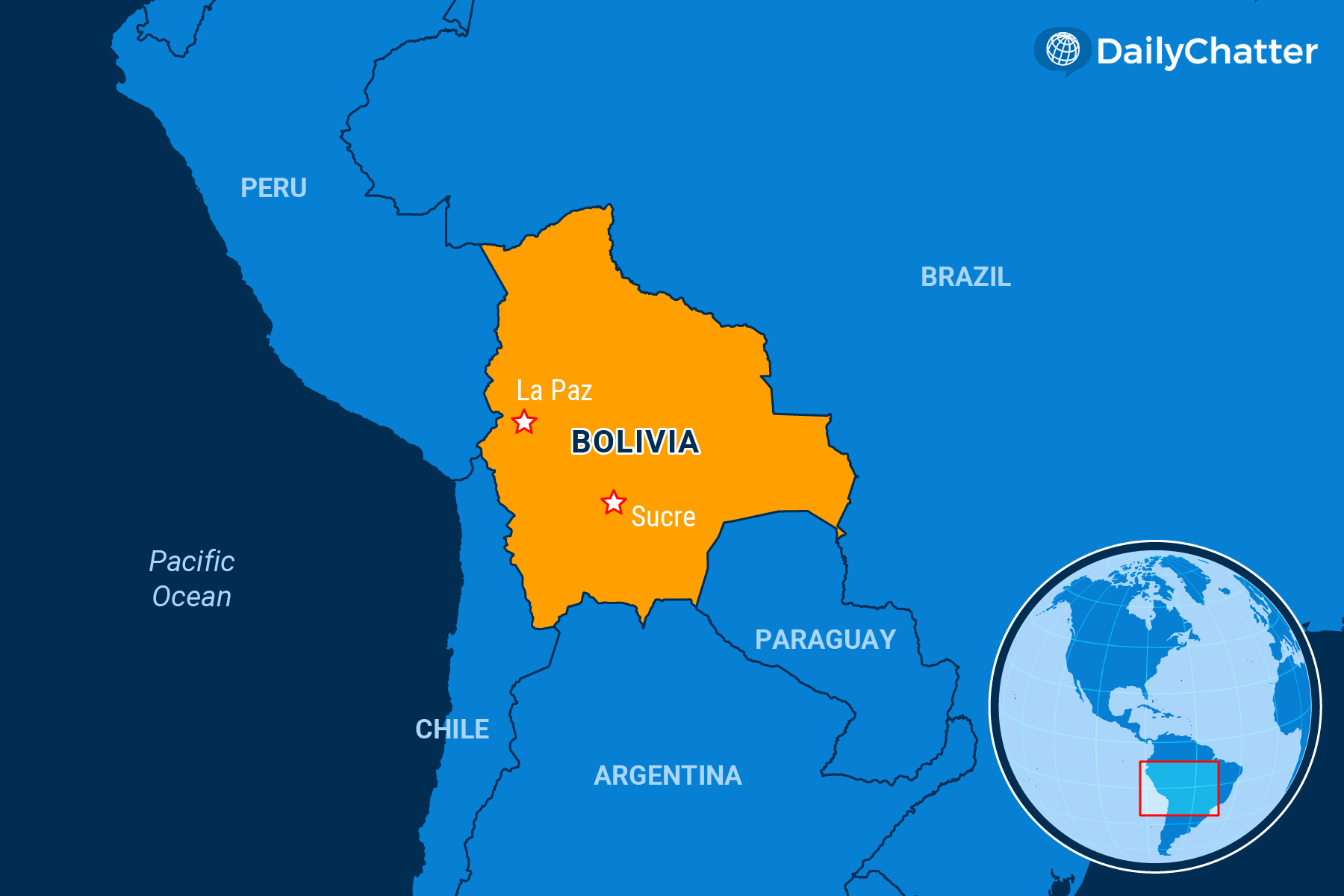
A lot is capturing Bolivians’ attention these days. Wildfires are raging through the forests. Cases of Covid-19 are rising again. Its national soccer team is playing the World Cup qualifiers. But what really has the country mesmerized – and polarized – is the fate of former Interim President Jeanine Anez – she was arrested in March for staging a coup that ousted ex-President Evo Morales and sanctioning violence against her political opponents.

Bolivians are divided over seeing her as a victim of a political witch hunt or as a former tyrant who is finally receiving her comeuppance.

Anez famously carried a leather Bible into the country’s presidential palace in November 2019 after Morales fled the country. The ousted president had replaced the Christian text with “acts honoring the Andean earth deity called the Pachamama” at official public ceremonies. A socialist who was wildly popular among working-class voters, Morales was the first indigenous Bolivian to become the country’s head of state, as the BBC explained. He had been in office for 14 years and had stirred controversy for winning a fourth term due to fraud, critics alleged.

After his departure, Morales’ party, the Movement for Socialism, staged protests that elicited a brutal crackdown and resulted in 20 dead and almost 100 injured in late 2019. As the Associated Press noted, the Organization of American States released a scathing report that said Bolivian security forces tortured and executed Morales’ supporters.

Last year, however, Anez’ political fortunes turned. Morales’ former economy and public finance minister, Luis Arce, won the presidency. His win solidified public support for Morales’ civil rights and economic agenda, the New Republic wrote. Arce vowed to bring to justice the plotters who brought about Morales’ ouster, Agence France-Presse wrote.

Now, it is the question of whether and how to prosecute those responsible for the violence that followed Morales’s resignation that is testing this politically volatile South American nation, wrote the Washington Post. “Since Bolivia lacks an independent judicial system, it will be very difficult to have an impartial investigation into these allegations,” César Muñoz, a senior researcher with Human Rights Watch, told the newspaper.

Meanwhile, writers at the Economist and elsewhere wondered whether Arce’s administration would pave the way for Morales to return. But Arce is not waiting on his former boss to give him direction.

Recently, Bolivian prosecutors charged Anez with genocide stemming from the deaths of 20 protesters in 2019, Reuters reported. Soon after, Anez attempted to commit suicide. Changing their usual mantra claiming that Anez is the target of a political conspiracy, her lawyers told Al Jazeera that “she feels very harassed” and that her actions were a “cry for help.” The European Union, the US and other countries have expressed concern.

Mercy or punishment – that’s the question for Bolivia’s justice system now. And how it answers will show its commitment to justice.

W

Friday, August 27, 2021

Fighting For The Property Rights Of Indigenous People In Brasil


BRAZIL

Tug-of-War

Thousands of Indigenous people have been camped out on the streets of Brasilia this week, intent on putting pressure on Supreme Court justices who are due to start considering a case that will have far-reaching implications for their land rights, the Associated Press reported.

The 6,000 protesters from 173 ethnic groups are worried about a case that involves a lower court’s ruling that invalidated a claim by some Indigenous people in Santa Catarina state to what they say is their ancestral territory. The lower court based its decision on allegations that the group wasn’t occupying the land in October 1988, when Brazil’s constitution was signed after the nation’s return to democracy. The group denies that.

Protest organizers say the court’s decision could be “the ruling of the century,” because eliminating the 1988 benchmark would force judges across the country to impose that on similar pending cases and would affect a bill being considered in the legislature that would loosen protections for Indigenous lands.

President Jair Bolsonaro said Wednesday that overturning the lower court’s ruling would prompt new requests to officially recognize hundreds of Indigenous territories and create “chaos,” the AP wrote. He has repeatedly argued that Indigenous people control far too much land relative to their population size — their territories cover 14 percent of Brazil, mostly in the Amazon.

Other proponents of the bill, which include farming groups, say the 1988 cutoff date provides legal certainty regarding property law.

But Indigenous groups and their supporters say it ignores the fact many Indigenous people had been forcibly expelled from their lands, particularly during the military dictatorship or may not have formal means to prove their prior presence. And other critics, which include the UN and Human Rights Watch, say the case is really about allowing big businesses to exploit Indigenous lands.

Pi Surui, from the 7 de Setembro village in the Amazon rainforest state of Rondonia, said he had come to the capital to make clear that Indigenous territory is more than just land. “It is sacred, our history, our life,” he told the AP.

Brazil has 421 officially recognized Indigenous territories that are home to 466,000 people.

E

Tuesday, August 24, 2021

An Attempt To Impeach A Supreme Court Justice In Brasil


BRAZIL

Round Two

President Jair Bolsonaro has asked Brazil’s Senate to impeach a Supreme Court justice — a move unprecedented in Brazil’s history – in his escalating war on the judiciary and the electoral system, the Washington Post reported.

Senate’s president, Rodrigo Pacheco, will now decide whether there are grounds to open an investigation into Justice Alexandre de Moraes. The president’s impeachment filing alleges that the judge has carried out investigations with partisan and anti-democratic bias while acting as both investigator and judge. It also accuses him of violating free speech protections.

Since early last year, Bolsonaro has grown increasingly incensed over rulings that clarify that mayors and governors – and not the president – have the jurisdiction to impose restrictions to slow the pandemic. Bolsonaro, a virus-denier, has resisted any restrictions on people or businesses.

He escalated attacks on members of the judiciary following a decision by the electoral court on Aug. 3 to investigate Bolsonaro for his comments undermining the electoral system and de Moraes’ decision to include the president in the Supreme Court’s investigation into the spread of fake news. On Aug. 13, de Moraes also ordered the imprisonment of Roberto Jefferson, a close Bolsonaro ally and president of the Brazilian Labor Party, for also suggesting the voting system is easily manipulated on social media.

The Senate has never initiated an impeachment investigation against a Supreme Court justice and it’s unlikely they will this time, Paulo Calmon, a political science professor at the University of Brasilia, told the Associated Press: “This has a symbolic effect for his base…”

With his approval ratings sliding, Bolsonaro has insisted the country’s electronic vote system is prone to fraud – without presenting any evidence – and insisted that printed vote receipts would allow for auditing results, asking lawmakers to amend the constitution.

That has prompted concern he may be laying the groundwork to challenge election results. Recent polls have indicated that former President Luiz Inácio Lula da Silva, who is expected to run in next year’s race, would win handily in a runoff.

Meanwhile, in a rebuff to Bolsonaro, lower house lawmakers voted against the proposal to adopt printed vote receipts at electronic ballot boxes earlier this month.


Wednesday, August 4, 2021

Election Fraud In Brasil


BRAZIL

Mirror Images

Brazil’s Supreme Electoral Court (TSE) opened a probe into President Jair Bolsonaro this week after the far-right leader claimed that the current electronic voting system is vulnerable to fraud, reported Reuters.

Bolsonaro, who is running for reelection next year, said that the present system would help his leftist rival, former President Luiz Inacio Lula da Silva, return to power. He added that he would not accept the results of next year’s presidential elections if the voting system does not adopt printed receipts that can be counted in the event of disputed results.

His comments prompted his supporters to rally in multiple cities in support of the proposal. Meanwhile, a congressional committee will vote later this week on Bolsonaro’s proposal to introduce paper ballots.

On Monday, the TSE voted to investigate Bolsonaro on whether he committed a crime by attacking the country’s electoral system on social media and threatening Brazil’s democracy.

TSE judges emphasized that electronic voting is free of fraud, adding that there “has never been a documented fraud case in any election” since the system was implemented in 1996.

Bolsonaro’s critics said that the president is sowing doubt with his unfounded claims to build legitimacy when he doesn’t accept official results in 2022.


Tuesday, August 3, 2021

Peru;s New Leftist President


PERU

Hats, White and Black

Peruvians living in the Andean town of Niño Jesús de Huarapite feel as if nobody in the capital of Lima is in their corner. Many remember how Peruvian troops and US-trained counterterrorism forces perpetrated a massacre in the town to quash a Maoist insurgency in the 1980s. Today, with little economic development since then, most survive on a meager diet of potatoes harvested from the hills.

“The resentment here is that the whole world eats well, and we do not, and nobody remembers us,” resident Liez Quispe told the Washington Post.

It’s no wonder that the vast majority of people of Niño Jesús de Huarapite voted for Pedro Castillo, the leftist who was recently declared the winner of a June 6 runoff election, the BBC reported. The cowboy hat-wearing Castillo became a public figure in the South American country after he led a successful teachers’ strike in 2017. On the campaign trail, he vowed to nationalize the country’s mining and hydrocarbon sectors as part of a plan to create 1 million new jobs. Peru is the second-largest copper producer in the world. But poverty has increased significantly since the pandemic hit and more than one-third of Peruvians struggle to eat.

“I ask for effort and sacrifice in the struggle to make this a just and sovereign country,” he said after he was declared the winner, according to the Guardian.

Castillo defeated Keiko Fujimori, a conservative candidate who suggested that Castillo wanted to transform Peru into a mismanaged, economically struggling communist country like Cuba or Venezuela, the Financial Times explained. She is the daughter of former Peruvian President Alberto Fujimori, who is currently serving a 25-year sentence for corruption and human rights abuses.

His background is decidedly humbler. A former teacher born into a family of peasant farmers, he lives in a “humble two-story, adobe home” in a poor Andean town, the Associated Press wrote. His wife intends to bring vegetables they grow themselves and cheese made from their cows’ milk to Lima, the capital.

The new president faces structural political challenges. Competition between the president and lawmakers, corruption scandals and other crises have led to Peru having four presidents in the last five years. An elite backlash against Castillo’s leftist program and anti-democratic elements that he espoused before the election suggest Peruvian democracy is under threat, Foreign Policy magazine argued.

For example, a coalition of Castillo’s opponents have taken control of Peru’s Congress after officials rejected the candidacies of members of Castillo’s political party, Free Peru, Reuters wrote. Gridlock could ensue. But, according to Al Jazeera, Castillo has pledged to run a “pluralistic” government in a bid to reduce ideological tensions.

If that’s what it takes to help Liez Quispe, so be it.