Chile’s president aims to soothe investors over reforms - FT.com:
'via Blog this'
Tuesday, June 3, 2014

Brasil Says That It's Ready For The World Cup!
GLOBAL INSIGHT
June 2, 2014 6:48 pmWorld Cup attacks are an own goal for Brazil
Tardiness in readying stadiums hurts country’s image

Brazil’s deputy minister of sport, Luis Fernandes, used a teleconference to hit back at critics of the country’s preparations for the World Cup , which starts next week.
He said sections of public opinion in developed countries harboured prejudices against developing countries and their capacity to deliver major events, especially sporting tournaments.
Mr Fernandes cited a nightclub fire in southern Brazil last year when about 240 young revellers died. The tragedy was unfairly used by parts of the media to question Brazil’s capacity to host the World Cup and the Olympics in 2016, he argued.
ON THIS STORY
- Video Fifa rules face scrutiny over Qatar
- Fifa faces call to run World Cup vote again
- Comment Goldman gambles on World Cup
- Lex Brazil – Poll dancing
- Brazil news headlines
ON THIS TOPIC
- Brazil teaches Amazon’s cows to be green
- Global Insight Brazil underwhelmed by World Cup
- World Cup stadiums pose Brazil dilemma
- Brazil in deal to fund Amazon reserve
GLOBAL INSIGHT
“When similar accidents occurred in the UK, in France, in Russia, in China before hosting major global events and the same questioning or the same scepticism was not directed against those countries: so that is a prejudiced point of view from our perspective,” Mr Fernandes said, tapping into Brazilian irritation at criticism from abroad.
While his argument did not completely make sense – after all, Russia and China are also developing countries – the deputy minister raised some interesting questions.
Should developing countries be in the business of hosting and helping to finance expensive international sporting events, such as the Olympics and the World Cup, when they have so much else on their plates in terms of improving public services?
And do others have the right to question or criticise countries’ preparations for games or does this just amount to north-south chauvinism or ugly neocolonial prejudice?
The answer to the first question should depend on whether the public of the host country, rich or poor, wholeheartedly supports the idea of hosting the event. How taxpayers’ money is spent should be their choice, after all. In Brazil’s case, it seems many voters were in favour in 2007 when the country won the right to stage the World Cup.
But whereas Brazil was then enjoying an economic boom, today it is entering its fourth year of low growth. A poll in April from research group Datafolha showedBrazilians becoming more pessimistic about the economic outlook.
A new lower middle-class has emerged and begun to demand better government services. There is a perception that money is being wasted on the World Cup, especially in the form of corruption, when people want more spending on hospitals and schools.
To counter this backlash, the Brazilian government will have to do a better job of selling the benefits of staging the events. Part of the supposed upside is infrastructure – Brazil has unveiled several flagship projects to coincide with the World Cup, including two major airport terminals and a new dedicated rapid bus transit line in Rio de Janeiro.
The other purported benefit is to use the events to market Brazil to the outside world. But Brazil’s tardiness in preparing the stadiums for the World Cup has led to vocal criticism from Fifa, soccer’s organising body, and a lot of unflattering coverage in the international media.
If there is one lesson from staging a World Cup or Olympics, it is that the host country will invite an unusual amount of outside scrutiny. The Kiss nightclub fire in Santa Maria occurred after the unauthorised use of fireworks within the venue. The club was also alleged to have had inadequate safety procedures and exits in place. It would seem only natural that such an incident would invite more general concern abroad about safety standards at venues in Brazil.
Indeed, Brazil is hardly the first host country to suffer such scrutiny. The Winter Olympics in Sochi, Russia, this year were criticised for allegedly shoddy accommodation and cost overruns.
London’s preparations for the summer Olympics in 2012 were criticised by no less than the Republican candidate for the US presidency, Mitt Romney, although he later tried to retract his comments. Or witness the hammering Qatar is already taking over the 2022 World Cup.
International critics have a tendency to overlook cultural conditions. Brazil, for instance, has a culture of improvisation and getting things done at the last minute, Mr Fernandes said. The preparations may look chaotic but all will turn out fine in the end, he argues.
That may be so but when you are inviting the world to visit, an uncomfortable measure of scrutiny is only to be expected. Football, on and off the field, is no place for the thin-skinned.
Copyright The Financial Times Limited 2014. You may share using our article tools.
Please don't cut articles from FT.com and redistribute by email or post to the web.
Please don't cut articles from FT.com and redistribute by email or post to the web.
Monday, June 2, 2014
Tuesday, May 27, 2014
Bolivia's Evo Morales:Part-Time Footballer
Bolivia’s Evo Morales: part-time pro footballer
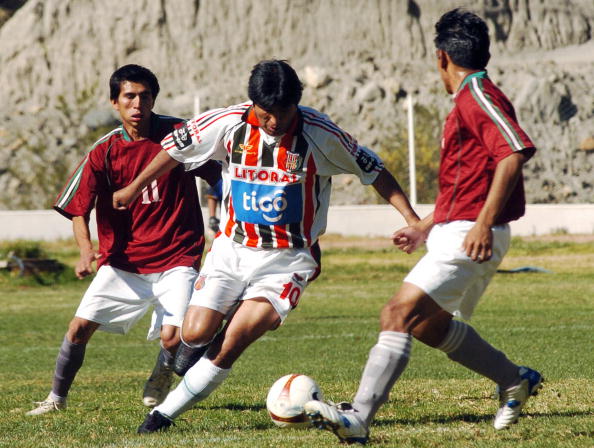 Once the first indigenous president of an impoverished country with an Indian majority has established his authority,tripled the size of the economy and is poised to win a third mandate, what else is there to do?
Sign up as a midfielder for a professional clubfor next season.
That is what Bolivia’s President Evo Morales recently did with Sport Boys, a team based in Warnes, outside the eastern city of Santa Cruz, once a bitter hardline opposition stronghold to his government.
“President Evo Morales will break two Guinness records,” said Mario Cronenbold, the club’s president who is also the mayor of Warnes: one for being the only professional player making his debut aged 54, and the other for being the only president in office who is playing professionally.
“He loves football and plays very well,” Cronenbold also said.
He certainly does love the game and is always ready to play matches even with other presidents, including once against former Iranian leader, Mahmoud Ahmadinejad.
In one of his crusading matches to protest against efforts by Fifa to stop playing international fixtures at high altitude, he once played near the top of a 5,400-metre glacier prove to that it was safe to stage matches in the Andean country.
Moreover, when your Argentine-born correspondent once landed in the country’s capital La Paz, he witnessed Morales playing a charity match at 3,600m above sea level alongside Diego Maradona, also to defend altitude football
He once had an association with two other football clubs, San José of Oruro and Litoral of La Paz. This time, Sports Boys says Morales will wear the number 10 shirt – just like Maradona did during most of his professional career.
True to his humble origins Morales, who is a former Aymara llama herder and coca farmer, would not receive a salary as a player only travel expenses, said the club’s president.
He is set to play for about 15 minutes each game, but will not be present in every match – he is a head of state, after all.
Aside from his penchant for the ball, the sport has played a big role in Morales’s political career. His skills on the pitch helped him to climb to the top of the coca growers’s union, which in turn was his launching pad as a national politician and helped him create a party, the Movement Towards Socialism, or MAS.
He won the presidency on the MAS platform for the first time in 2006, after Bolivia’s indigenous people voted in bloc.
Four years later, the combative president somehow escaped a red card during a football match between teams of political rivals – in retaliation for a foul, Morales was caught on camera delivering a swift knee which landed squarely in an opponent’s groin.
The Andean country may have not classified for the World Cup in Brazil, but that does not mean Bolivians cannot enjoy some classy football fun this year.
Related reading:S&P upgrades Bolivia amid upbeat growth outlook, beyondbrics
Bolivia vs Rurelec: paying one way or another, beyondbrics
Bolivia: banks start to feel the hand of the state, beyondbrics
Bolivia vs Rurelec: paying one way or another, beyondbrics
Bolivia: banks start to feel the hand of the state, beyondbrics
Subscribe to:
Posts (Atom)